EV Charger Installation in Calgary: Permits, Load Calcs, and Real Costs
What it really takes to install a Level 2 home charger in Calgary — including the load calculation that decides whether you need a panel upgrade or a smarter alternative.
A Level 2 EV charger install in Calgary typically costs $1,400–$3,200, including the dedicated 240V circuit, permit, and required load calculation. If your panel is near capacity, an EV Energy Management System ($1,200–$2,000) can be a cheaper alternative to a full panel upgrade. Every install needs a City of Calgary permit and inspection.
You bought the EV. Now you want to wake up every morning to a full charge in your own garage instead of hunting for a public stall in a Calgary January. A Level 2 home charger is the right call — it adds far more range per hour than a standard plug, and it is the difference between an EV that fits your life and one that nags it.
But "just install a charger" hides a few decisions that determine your cost and whether the install is safe and code-compliant. Here is the real picture for Calgary in 2026.
What a proper install actually costs
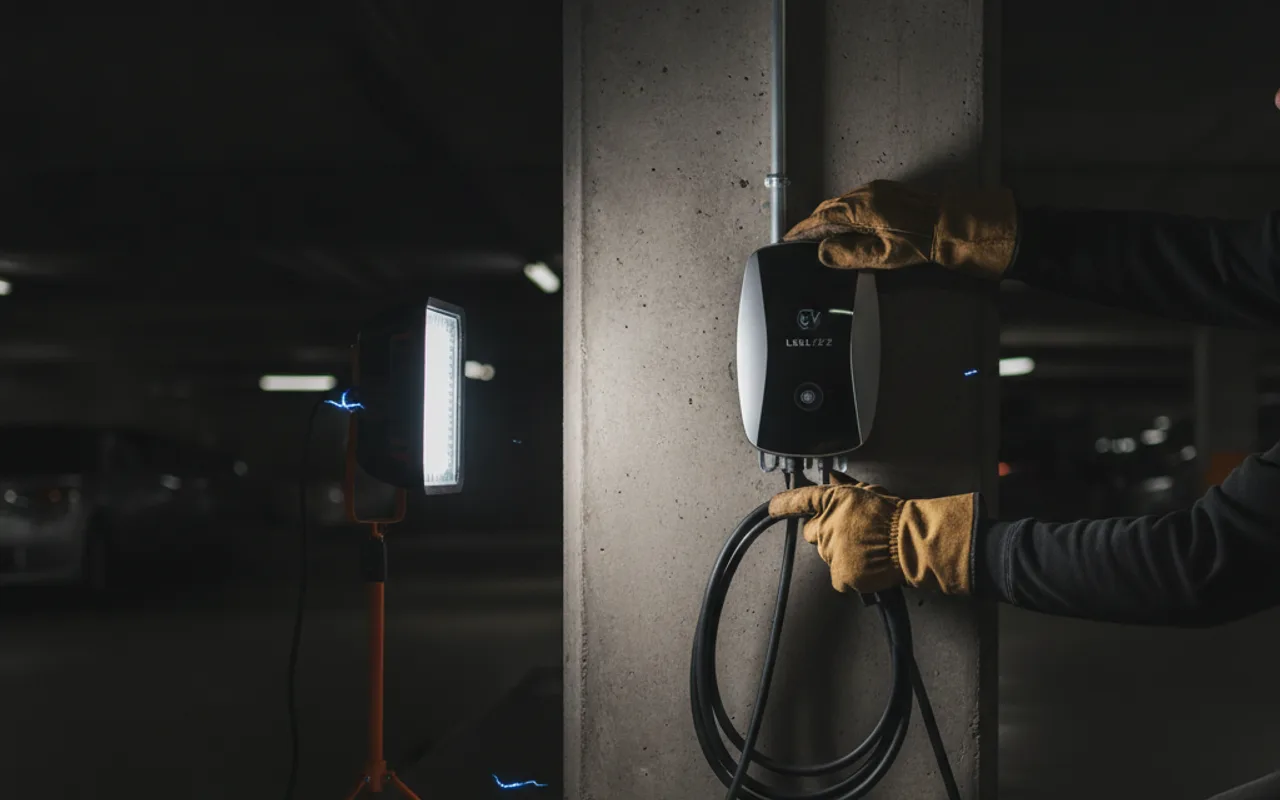
For a Level 2 charger installed at a Calgary home, a realistic all-in budget is roughly $1,400 to $3,200. That figure typically covers the dedicated 240V circuit, the wiring run, the City of Calgary electrical permit, the required load calculation, and labour, before factoring in any rebates or incentives that may offset the cost. Where you land in that range depends mostly on one thing: how far the charger is from your panel, and what your panel can handle.
- Short, clean run from the panel to an attached garage — lower end.
- Long run, detached garage, or trenching — higher end.
- Panel near capacity — you may need load management or an upgrade (more below).
The load calculation is not optional
An EV charger is a large continuous load, and code requires an electrician to perform a load calculation before adding it. This is the step that answers the real question: can your existing electrical service safely take on a charger, or are you about to overload it?
“The load calc is the most important $0 line item on the quote. It is what stops a charger from quietly overloading a service that was already running close to its limit.”
If the calculation shows your service has room, great — you install and move on. If it shows you are tight, you have a choice to make.
The panel-upgrade fork: EVEMS vs. a bigger service
When a load calc says your 100-amp service cannot comfortably swallow a charger, the old default was an expensive jump to a 200-amp panel. There is now a smarter, often cheaper option: an EV Energy Management System (EVEMS).
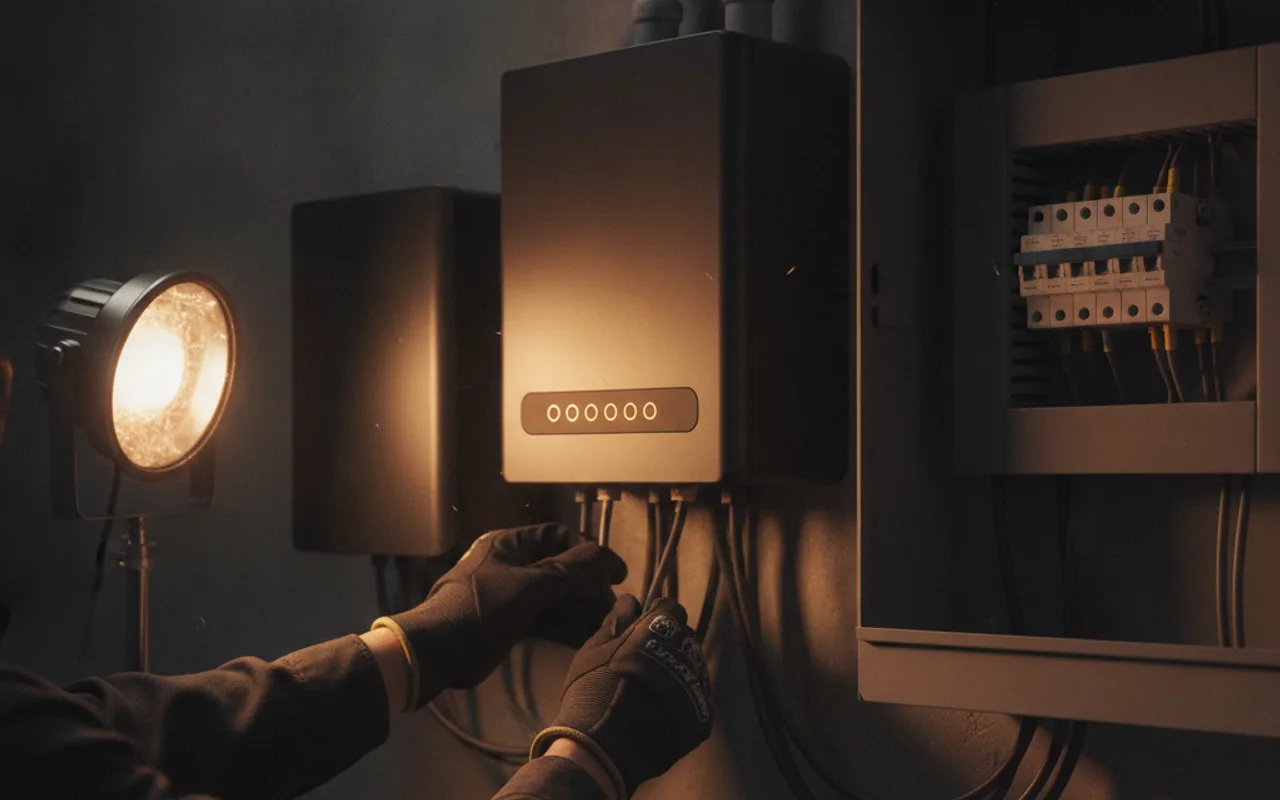
An EVEMS uses load management to monitor your home and throttle or pause EV charging when the house is drawing heavily — so the charger only pulls power that is actually available. In Calgary, an EVEMS solution typically runs $1,200 to $2,000, which can be considerably less than a full panel upgrade.
- Choose EVEMS when your panel is close to full and a charger is the main new load.
- Choose a panel upgrade when you also have a suite, hot tub, AC, or shop loads coming.
- A good electrician will model both and tell you which actually pencils out for your home.
The permit and inspection
Like any new circuit, an EV charger install requires a City of Calgary electrical permit and a subsequent inspection. A licensed contractor pulls the permit as part of the job. This is what protects your insurance coverage and your peace of mind — a fault on a high-current circuit you ran without a permit is exactly the scenario you do not want to explain to an adjuster.
Cold-weather charging: a Calgary reality
Calgary winters change how an EV charges, and it helps to set expectations:
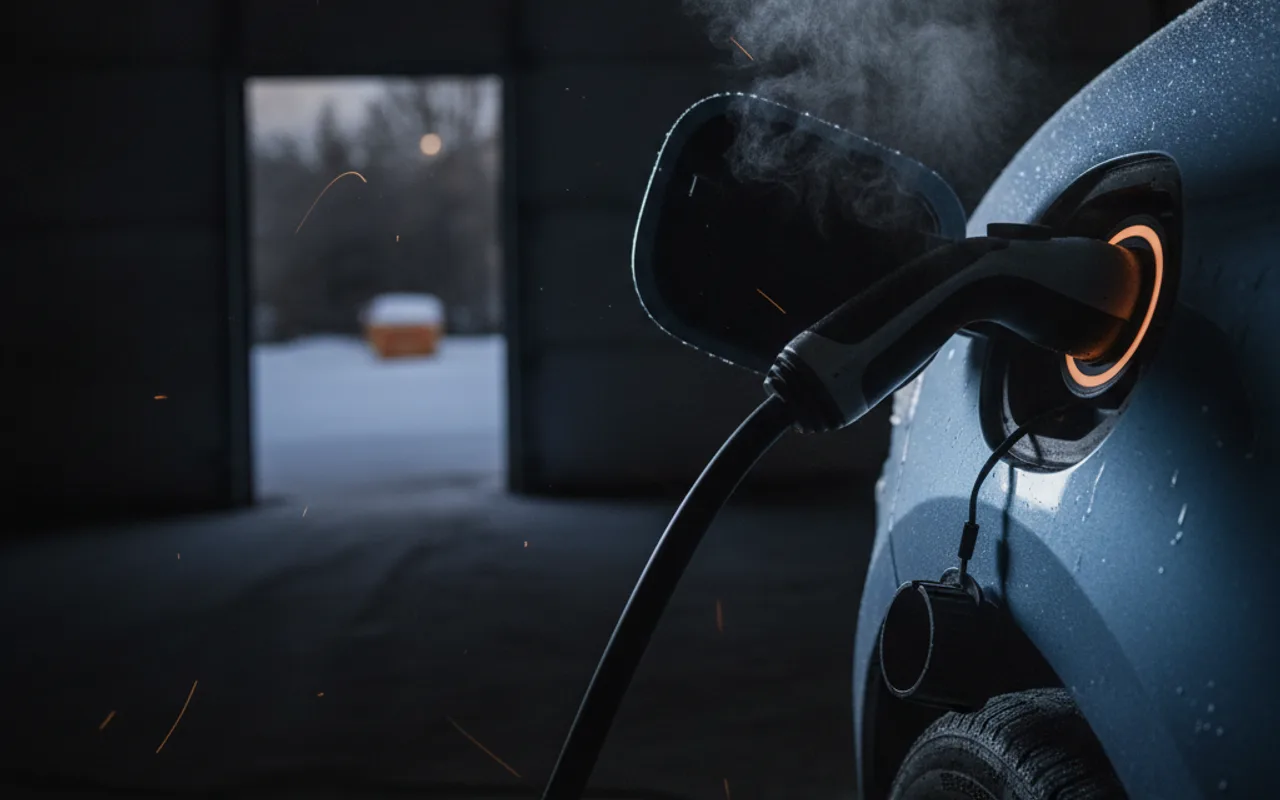
- Cold batteries accept charge more slowly until they warm up — Level 2 at home largely smooths this out compared with relying on slow public charging.
- Range drops in deep cold, so charging at home overnight (often with battery pre-conditioning) matters more in winter, not less.
- Garage charging keeps the connector, cable, and vehicle warmer and more reliable than an exposed outdoor unit.
- Hardwired chargers tend to handle cold cycling better than plug-in units over the years.
Getting it right the first time
The cleanest EV installs start with the load calculation, not the charger. If you are deciding between a charger, an EVEMS, or a panel upgrade — or you just want a fixed, permit-included quote — the team at Shock Stop can run the numbers on your actual service and recommend the option that fits your home and your driving. An EVEMS is often just the first piece of a broader connected-home plan, too — see our guide to smart home wiring in Calgary for how EV load management, smart panels and home automation typically get designed together. Reach out to book a load assessment.
Questions about this
How much does it cost to install an EV charger in Calgary?
A realistic all-in budget for a Level 2 home charger is roughly $1,400 to $3,200, covering the dedicated 240V circuit, wiring run, permit, load calculation, and labour. Where you land depends mostly on the distance from your panel and whether your panel has room for the load.
Do I need a panel upgrade to install an EV charger?
Not always. A required load calculation determines whether your existing service can safely take on a charger. If it is tight, an EV Energy Management System (EVEMS), which throttles charging when the house is drawing heavily, is often a cheaper alternative to a full panel upgrade.
Is a permit required for an EV charger installation?
Yes. Like any new circuit, an EV charger install requires a City of Calgary electrical permit and a subsequent inspection, which a licensed contractor pulls as part of the job.
Does cold weather affect home EV charging in Calgary?
Cold batteries accept charge more slowly and range drops in deep cold, which is why home charging overnight matters more in winter. Garage charging also keeps the connector, cable, and vehicle warmer and more reliable than an exposed outdoor unit. See our full guide to why EV charging slows down in a Calgary winter for the battery-chemistry reasons and how preconditioning offsets it.