Cold snaps can slow Level 2 EV charging by 20 to 40% in Calgary. Here's the real reason why, and how preconditioning and proper circuit sizing fix it.
In Calgary's cold snaps, Level 2 EV charging speed can drop 20 to 40 percent as a cold battery's management system limits current and diverts energy to warm the pack. Preconditioning while still plugged in, a heated or insulated garage, and a properly sized circuit with load management largely offset the loss.
Plug in a Level 2 home charger on a -25°C Calgary morning and you'll notice it: the same charger that added 40 km of range an hour in July might only manage 25 to 30 km now. EV charging slows down in cold weather for real, physical reasons — battery chemistry, not your charger or your panel, is usually the bottleneck — and in a Calgary winter with regular cold snaps below -20°C, that slowdown can cut Level 2 charging speed by roughly 20 to 40 percent. The good news: most of that loss is manageable with the right preconditioning habits and a properly set up home charging station, not a mystery you just have to live with.
Why cold actually slows down charging
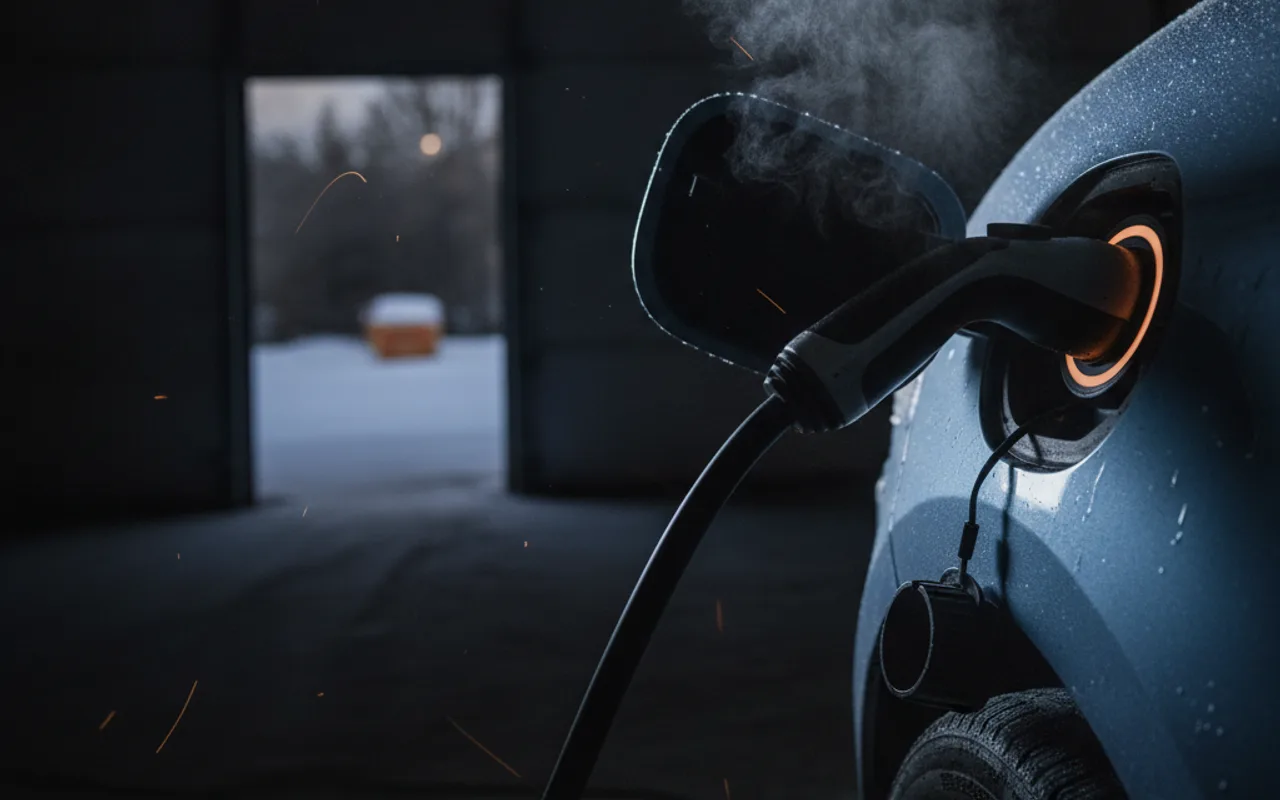
A lithium-ion battery pack accepts current more slowly when it's cold. As the pack temperature drops, its internal resistance rises, and the battery management system — the onboard computer that protects the pack from damage — deliberately caps the current it will accept to avoid stressing cold cells. Many EVs also spend some of the incoming energy actively warming the pack before they let charging ramp up to its normal rate, which is why the first several minutes of a cold-soak charge can feel especially slow before it picks up.
- Internal battery resistance rises as pack temperature drops, so the battery management system caps how much current it will accept.
- Many EVs divert some incoming energy to actively warm the battery pack before charging can reach full speed.
- A charger, cable, and connector that sat outside all night in deep cold need a few minutes to warm up before delivering their full rated output.
- A vehicle that cold-soaked overnight in an unheated garage or driveway does more of that warming work than one parked somewhere insulated.
“Your charger isn't broken and your panel isn't underpowered — a slow charge on a cold Calgary morning is almost always the vehicle's battery management system protecting itself, not a wiring problem.”
Preconditioning: the single biggest fix
The most effective thing most Calgary EV owners aren't doing is preconditioning the battery while still plugged in. Set a departure time in your vehicle's app, and most EVs will start warming the pack using power from the wall in the last stretch before you leave — energy that comes from your home circuit, not from the battery you're trying to charge. Skip this step and unplug a cold-soaked battery, and the vehicle instead spends its own stored range warming itself up on the drive, which is the opposite of what you want on a January commute.
- Set a departure time or charging schedule in your EV's app so preconditioning draws from the wall while you're still connected, not from the battery after you unplug.
- Leave the vehicle plugged in overnight rather than unplugging once the app shows "done" — trickle maintenance charging keeps the pack warmer than a full cold soak.
- If your EV supports navigating to a fast charger to trigger pack preconditioning, some models still warm the battery even when the destination is your own home charger.
Garage, driveway, or acreage — where you charge matters
An insulated or heated attached garage is worth more than people expect for winter charging, because it keeps the vehicle, the cable, and the charger's connector warmer between drives, which reduces how much of the cold-weather penalty you actually feel each morning. A charger mounted outdoors on an exposed wall, or a vehicle parked in an open driveway all night, starts every charge from a colder baseline. This matters even more on acreage properties around Cochrane, Rocky View County, and the Foothills, where a charger sometimes feeds an unheated detached garage or shop rather than a garage attached to the house — see our guide to acreage electrical costs in Calgary for what a longer, insulated run to an outbuilding typically involves.
Sizing your circuit so charging doesn't fight your block heater
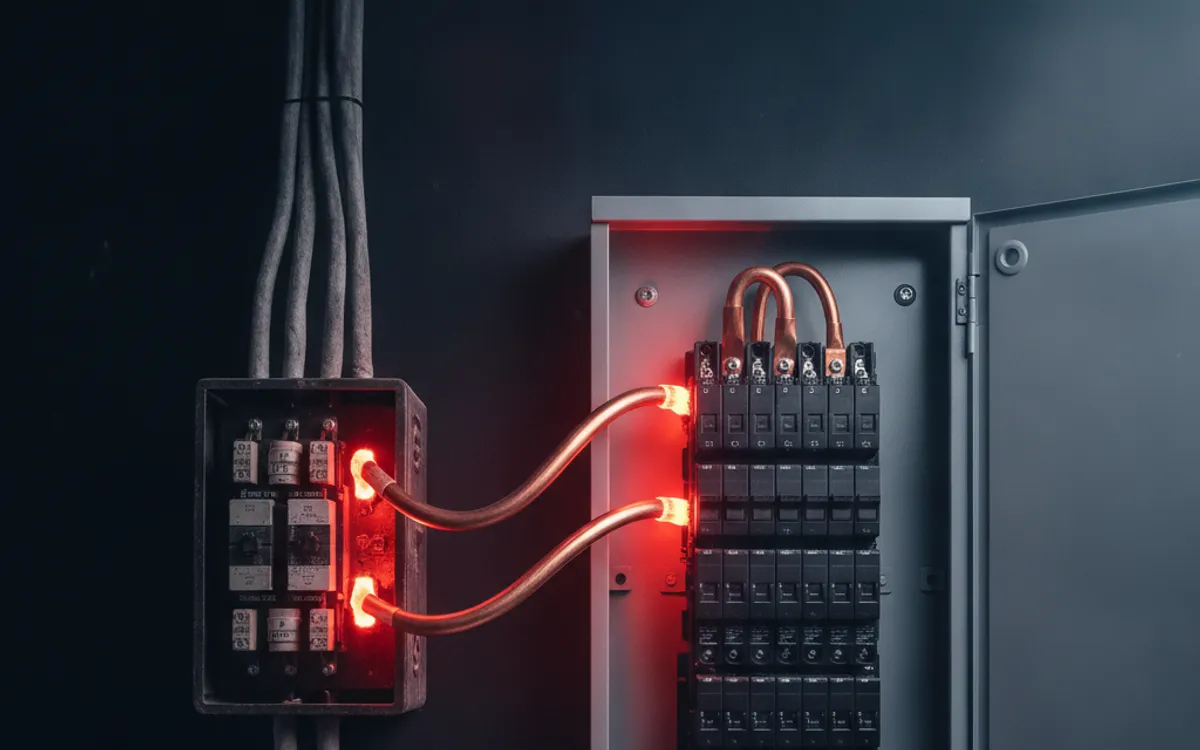
Winter is exactly when your EV charger and your block heater are most likely to be drawing power from the same panel at the same time, overnight, for months. A dedicated 240V circuit sized correctly for your charger — the load calculation covered in our guide to EV charger installation in Calgary — is what keeps that from becoming a problem, and a block heater deserves its own dedicated, GFCI-protected circuit for the same reason our block heater outlet installation guide lays out: two large, months-long continuous loads sharing one circuit is a common source of a breaker that only trips on the coldest nights of the year.
“A charger and a block heater are both small, steady loads on their own — but running them on the same circuit through a Calgary winter is exactly the kind of setup that trips a breaker at 2 a.m. in January.”
EVEMS load management in winter — the trade-off
If your panel is close to full, an EV Energy Management System (EVEMS) is often a cheaper alternative to a full panel upgrade — but it works by throttling or briefly pausing your charger when the house is drawing heavily elsewhere, and in winter, that competing load is more likely to be running at 11 p.m. than in July. A block heater, electric baseboard heat, or a range all pull real power on a cold night. It's still usually the right call financially, but it's worth scheduling your overnight charge window with that in mind, or asking your electrician whether your specific mix of winter loads suits EVEMS or points toward a straightforward panel upgrade instead.
The pre-winter EV charging checklist
- Set a departure time or charging schedule in your EV app so preconditioning draws power from the wall, not the battery.
- Leave the vehicle plugged in between drives through cold snaps rather than unplugging as soon as charging finishes.
- Confirm your charger sits on its own dedicated circuit, not shared with a block heater or another large winter load.
- If you're on EVEMS, schedule your main overnight charge for whenever your other big winter loads are lightest.
- An insulated or heated garage is worth the difference in charging speed if you have the option.
None of this requires new hardware for most Calgary EV owners — it's mostly a change in habits plus confirming your circuit was sized and installed correctly in the first place. If you're not sure whether your charger and your block heater are fighting each other on the same panel, or you're planning a first EV charger install and want it set up right for the cold from day one, the team at Shock Stop can run the load calculation and get the circuit — and the permit — done properly. It's one more item worth adding to the walkthrough in our winter electrical safety checklist before the first hard freeze. Reach out to book an assessment anywhere from Calgary to Airdrie, Cochrane, and the surrounding communities.
Questions about this
Why does my EV charge slower in a Calgary winter?
It's almost always the vehicle protecting itself, not your charger or your panel. A cold battery has higher internal resistance, so the battery management system deliberately limits how much current it will accept, and some of the incoming energy gets diverted to warm the pack before charging can speed back up. At -20°C and below, that combination can cut Level 2 charging speed by roughly 20 to 40 percent.
Does Calgary cold permanently damage an EV battery or a home charger?
No. The slowdown is a temporary, protective response, not damage — the battery management system is designed to prevent exactly the kind of harm that fast-charging a cold pack could cause. A quality Level 2 charger and its cable are rated for the temperatures a Calgary winter delivers; the connector and cable simply need a few minutes to reach full rated output after sitting in deep cold.
What is preconditioning and does it actually help?
Preconditioning warms the battery pack using energy from the wall while the vehicle is still plugged in, rather than pulling that energy from the battery itself once you unplug. Most EVs let you schedule a departure time or trigger preconditioning from the app; doing this before you leave, while still connected to your home charger, is the single biggest lever most Calgary owners are not using.
Will a higher-amperage Level 2 charger fix slow winter charging?
Not on its own. The bottleneck in cold weather is almost always the battery accepting current, not the charger delivering it or the circuit carrying it — a 40-amp charger and a 32-amp charger will both be throttled by the same cold pack. Proper circuit sizing still matters for your baseline charging speed the rest of the year, but it will not undo a cold-weather slowdown.
Does EVEMS load management make winter charging even slower?
It can add to it. An EV Energy Management System throttles your charger when the house is drawing heavily elsewhere — a block heater, a range, a dryer — and in winter those other loads are often running at the same time you most need a full overnight charge. It is still usually the right call over a full panel upgrade, but it is worth scheduling your charge window around when competing loads are lightest.
Is a heated or insulated garage worth it just for EV charging?
For most Calgary homeowners, yes. Charging in a heated or even just an insulated attached garage keeps the vehicle, the cable, and the connector warmer between drives, which reduces how much of the cold-weather penalty you actually feel. It matters even more on acreage properties, where a charger is sometimes fed to an unheated detached garage or shop rather than a garage attached to the house.