Does your Calgary home's electrical panel have room for a heat pump? Here's the load calculation, circuit sizing, and permit rules that decide it in 2026.
If you're adding a heat pump to your Calgary home — for supplemental heating, cooling, or as part of an all-electric retrofit — the electrical side of the project is not a footnote on the HVAC quote. Heat pump electrical requirements in Calgary come down to three things: a dedicated 240-volt circuit, a breaker sized to the compressor's actual draw, and a load calculation confirming your existing panel can carry the extra amperage safely. Skip that step, and a heat pump that looks great on the HVAC contractor's spec sheet can quietly overload a service that was already close to its limit.
Does a heat pump need a panel upgrade in Calgary?
Not always — but often enough that you should ask before you sign an HVAC contract. A ducted, whole-home heat pump typically draws somewhere in the range of 20 to 60 amps at 240V depending on its size and staging, while a smaller ductless mini-split may need only 15 to 30 amps. On a modern 200-amp service carrying typical residential loads, there is usually room to spare. On an older 100-amp service — especially one already running electric baseboard heat, a secondary suite, or an EV charger — the added draw is often exactly what pushes a home past its limit and triggers a panel upgrade.
“A heat pump is a large, near-continuous 240V load. The load calculation is what tells you whether your panel has room for it — not the size of the outdoor unit, not the efficiency rating, just the amps you actually have left on your service.”
What the electrical side of the install actually requires
Whatever size heat pump you choose, the Canadian Electrical Code sets out clear requirements for the circuit that feeds it. A licensed electrician sizes the circuit off the manufacturer's nameplate — specifically the Minimum Circuit Ampacity and Maximum Overcurrent Protection figures — rather than a generic rule of thumb.
- A dedicated 240V circuit — nothing else shares it.
- Breaker and wire gauge sized to the unit's nameplate ampacity, not a guess.
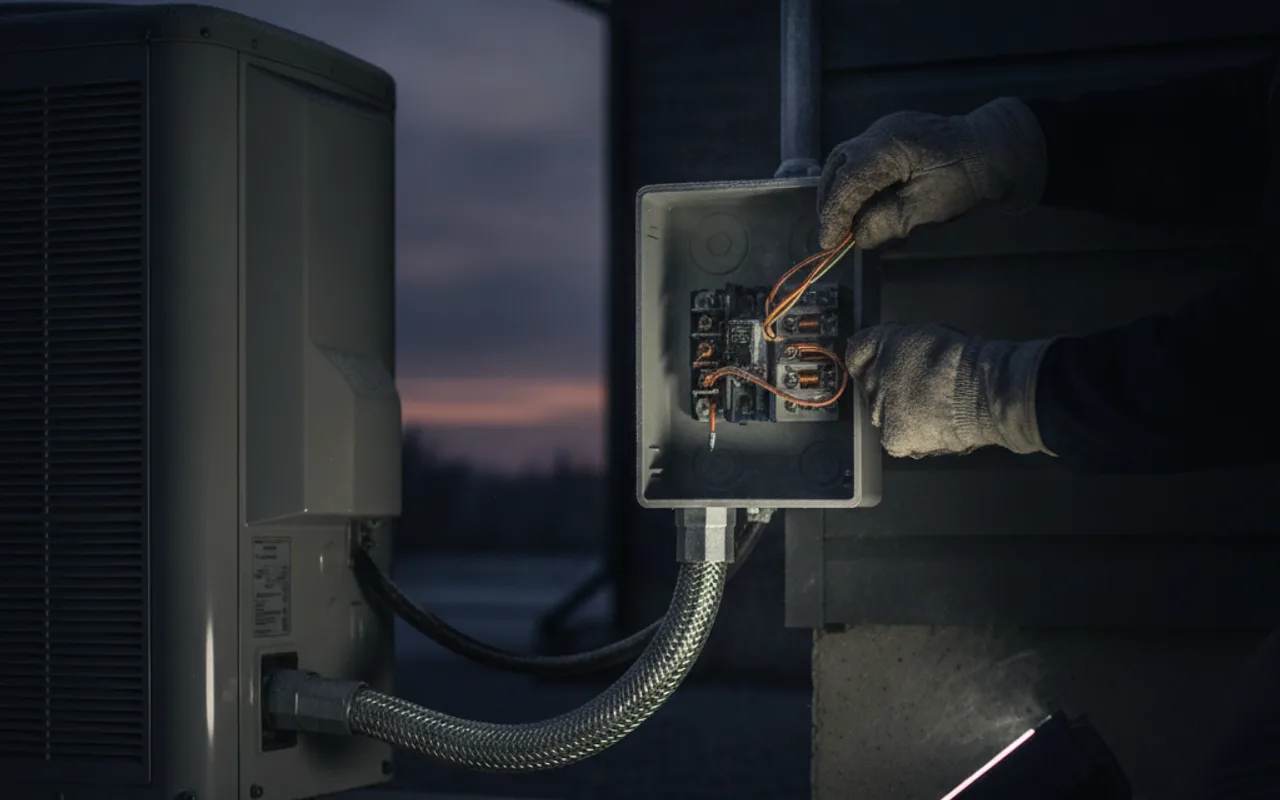
- A disconnect switch within sight of the outdoor condenser or heat pump unit.
- Weatherproof, outdoor-rated wiring methods and enclosures for the exterior run.
- Bonding and grounding of the outdoor unit's metal casing.
The load calculation — the step that decides everything else
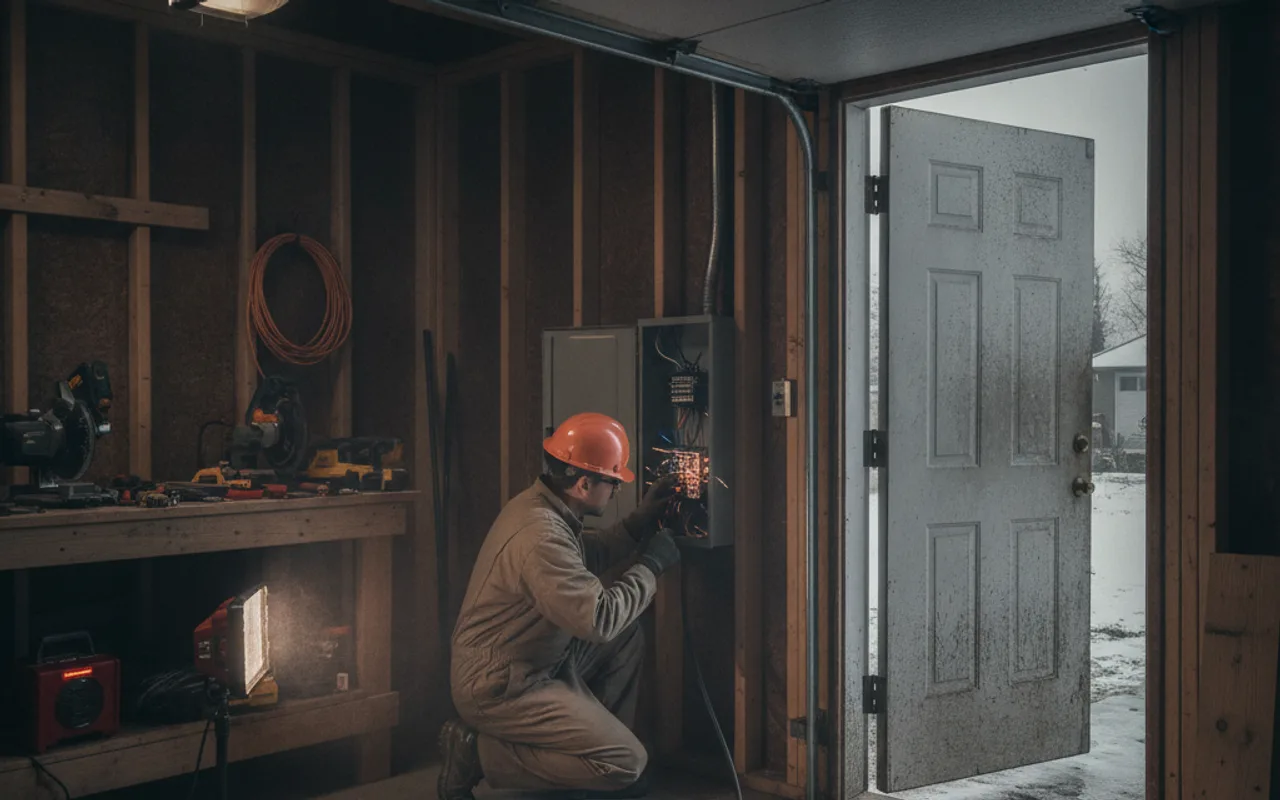
Before any wire gets pulled, a load calculation under the Canadian Electrical Code's dwelling load rules adds up everything already drawing power in your home — space and water heating, ranges, dryers, an EV charger if you have one — and checks whether there is genuine headroom left for the heat pump's draw. This is the same calculation we run before adding an EV charger or a hot tub circuit, and it is just as non-negotiable here.
- On 200A service with typical loads — usually enough headroom for most heat pumps.
- On 100A service with electric baseboard heat or a suite already installed — likely need a panel upgrade first.
- On 100A service with gas heat and modest other loads — a load calculation may show just enough room to proceed.
- Already have an EV charger, or planning one — the two large 240V loads together are a common tipping point.
Ductless mini-split vs. central heat pump: different electrical needs
The two most common heat pump types in Calgary homes have meaningfully different electrical footprints. A ducted, central heat pump ties into your existing furnace and ductwork and typically draws the most current — closer in scale to a hot tub or an electric dryer circuit. A ductless mini-split system serving one or two zones draws less per head, but often needs its own dedicated circuit per indoor unit once you install more than one — so a multi-zone mini-split retrofit can add up to more total electrical work than a single central system, even though each individual circuit is smaller.
The permit — and who can pull it
A heat pump electrical circuit requires a City of Calgary electrical permit — $116.50, the same fee as any other new dedicated circuit. A licensed contractor pulls the permit, and the inspection that follows checks the things that matter most on a compressor circuit: correct breaker and wire sizing against the nameplate, disconnect location, weatherproofing, and bonding. This is contractor territory, not homeowner-permit work — the combination of outdoor exposure, a compressor's inrush current, and a load calculation tied to the rest of your home's service puts it outside what a homeowner electrical permit is meant to cover.
Older Calgary homes vs. newer builds
Where your home sits in Calgary's housing stock matters here. Newer builds in communities like Airdrie and Cochrane are typically wired for 200-amp service already, and in most cases there's room for a heat pump without touching the panel. Established Calgary neighbourhoods and acreage properties out in Rocky View County and the Foothills — often still running original 100-amp service from decades ago — are the homes most likely to need a load calculation up front, and, if the numbers are tight, a panel upgrade before the heat pump goes in.
Coordinating with your HVAC contractor
A heat pump project usually starts with an HVAC quote, and the electrical scope should be settled before that quote becomes a signed contract — not discovered mid-install when the electrician shows up and finds a 100A panel with no headroom left. The cleanest projects have the electrical load calculation done first, so the HVAC contractor is quoting a heat pump your panel can actually run, and the two trades aren't scheduling around each other's surprises.
Worth adding while the panel's open: surge protection
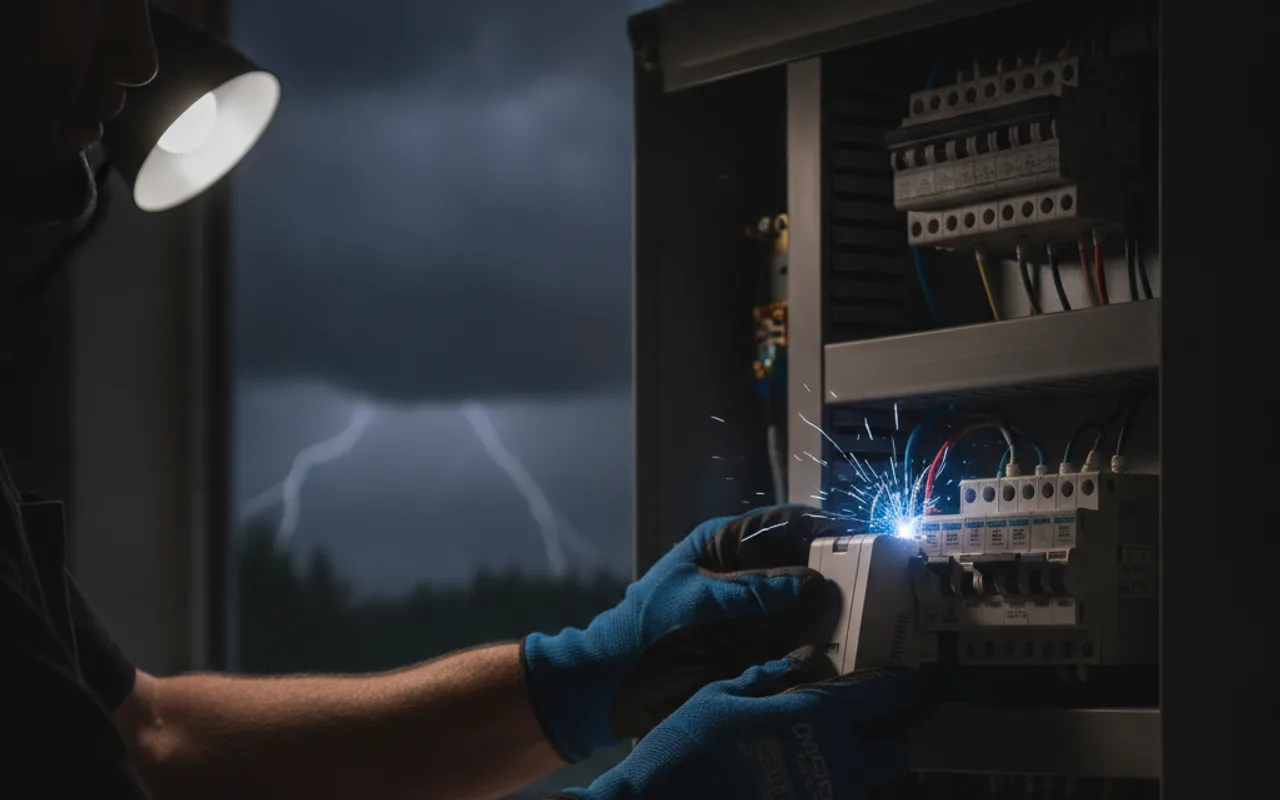
Heat pump control boards are exactly the kind of sensitive electronics a nearby lightning strike or a grid surge can fry, and control-board replacements are not cheap. If you're already opening the panel for a new circuit, adding whole-home surge protection at the same visit is a small incremental cost next to replacing a compressor's control board down the road.
Questions Calgary homeowners ask about heat pump electrical work
Can a homeowner pull their own permit for a heat pump circuit? No. A heat pump circuit is compressor-driven, outdoor-rated work tied to a whole-home load calculation, and it falls outside the scope of the City's homeowner electrical permit. It needs a licensed electrician.
How much does the electrical side add to a heat pump project? For a straightforward dedicated circuit on a panel with room to spare, budget roughly $800 to $1,800 including the permit. If the load calculation shows you need a panel upgrade first, add the cost of that upgrade — typically $4,000 to $6,000 for a 100A to 200A service, as detailed in our guide to panel upgrade costs in Calgary.
Do I need a panel upgrade for a ductless mini-split, or only for a central heat pump? Not necessarily — a single-zone mini-split draws less than a central system and often fits on a 100A panel with headroom to spare. It's when you're adding a multi-zone system, or adding a heat pump to a panel that's already carrying an EV charger, a suite, or baseboard heat, that the load calculation is more likely to point toward an upgrade.
Will adding a heat pump affect my home insurance? Disclose the heat pump to your insurer and keep your permit and inspection paperwork on hand. As with any new electrical load, a documented, permitted installation is what protects you if a claim ever touches that circuit — undocumented work is what complicates a claim, not the heat pump itself.
If you're planning a heat pump for your Calgary home — whether it's a single mini-split or a whole-home ducted system — the team at Shock Stop can run the load calculation on your actual panel, size the circuit to the equipment you're choosing, and handle the permit and inspection from the start, across Calgary, Airdrie, Cochrane and out into Rocky View County. Reach out for a heat pump electrical assessment before you sign your HVAC contract.