What a licensed electrician costs in Calgary in 2026: hourly rates, flat-rate prices for common jobs, what drives a quote up, and how to compare bids fairly.
A licensed electrician in Calgary commonly bills roughly $100 to $160 per hour in 2026, but most small repairs are quoted flat at about $150 to $700. A 240V circuit often runs $300 to $600 and a 100A to 200A panel upgrade $4,000 to $6,000. Permit, materials and access move the price most.
If you are asking how much an electrician costs in Calgary, the short answer for 2026 is that licensed electricians commonly bill roughly $100 to $160 per hour, but most homeowners never pay by the hour. Small repairs are quoted flat, usually between $150 and $700, and bigger projects like a new 240V circuit or a panel upgrade are priced by scope after a look at your actual panel. The number on your quote is driven far less by the hourly rate than by the permit, the materials, and how hard the wiring is to reach.
“The hourly rate is the least useful number on an electrician's quote — scope, permit and access decide what you actually pay.”
Hourly rates vs. flat-rate pricing
There are two ways electrical work gets priced in Calgary, and they suit different jobs. Hourly billing makes sense for open-ended work where nobody can know the answer until the wall is open, like tracing a fault or a mystery tripping breaker. Flat-rate pricing is what you should expect for anything with a defined scope, because it lets you compare bids and removes the incentive to run the clock.
- Hourly: roughly $100 to $160 per hour for a licensed electrician, with a minimum service-call charge that usually covers the first hour or so on site.
- Flat rate: a fixed price for a defined job, including labour, standard materials, the permit and cleanup. This is how most installs and upgrades are quoted.
- Time and materials with a cap: common for renovations where the scope can shift, with an agreed ceiling so the bill cannot run away.
What common jobs typically cost in Calgary
These are Calgary market ranges we see in practice, not a quote, and they assume the panel has room and the run is reasonable. They are useful for sanity-checking a bid you have already received.
- Like-for-like GFCI outlet replacement: about $150 to $250 including the device and labour.
- Replacing a breaker: about $200 to $400 depending on panel access and breaker type, with AFCI and dual-function breakers at the top of that range.
- Whole-home surge protection: about $300 to $700 installed.
- New 240V outlet on a short run: about $300 to $600, rising on longer runs or a tight panel.
- Block heater outlet: about $250 to $450, including the permit and a weatherproof GFCI receptacle.
- Hot tub circuit with disconnect: about $1,000 to $2,500 all-in.
- Panel upgrade, 100A to 200A: about $4,000 to $6,000 all-in.
If you want the detail behind the biggest line on that list, our guide to what a panel upgrade costs in Calgary breaks down the meter base, service conductors and ENMAX coordination that make it a larger project than it sounds.
What pushes a quote up
Two houses can ask for the same outlet and get very different prices, and it is almost always one of these factors.
- Access. Finished basement ceilings, insulated attics and fire-blocked walls take far more time than an open stud bay in a new build.
- Panel capacity. If a load calculation shows your service has no headroom, the job grows to include a sub-panel or a service upgrade first.
- Distance from the panel. Every extra metre of cable and every extra wall to cross adds labour and material.
- Older wiring. Aluminum branch wiring, knob and tube, or a recalled panel changes what can be safely connected to and how.
- Permit and inspection. Required for most new circuits, and a licensed contractor builds it into the price.
- Timing. Evenings, weekends and emergency calls bill at a premium.
Permits: the line item that should be on every quote
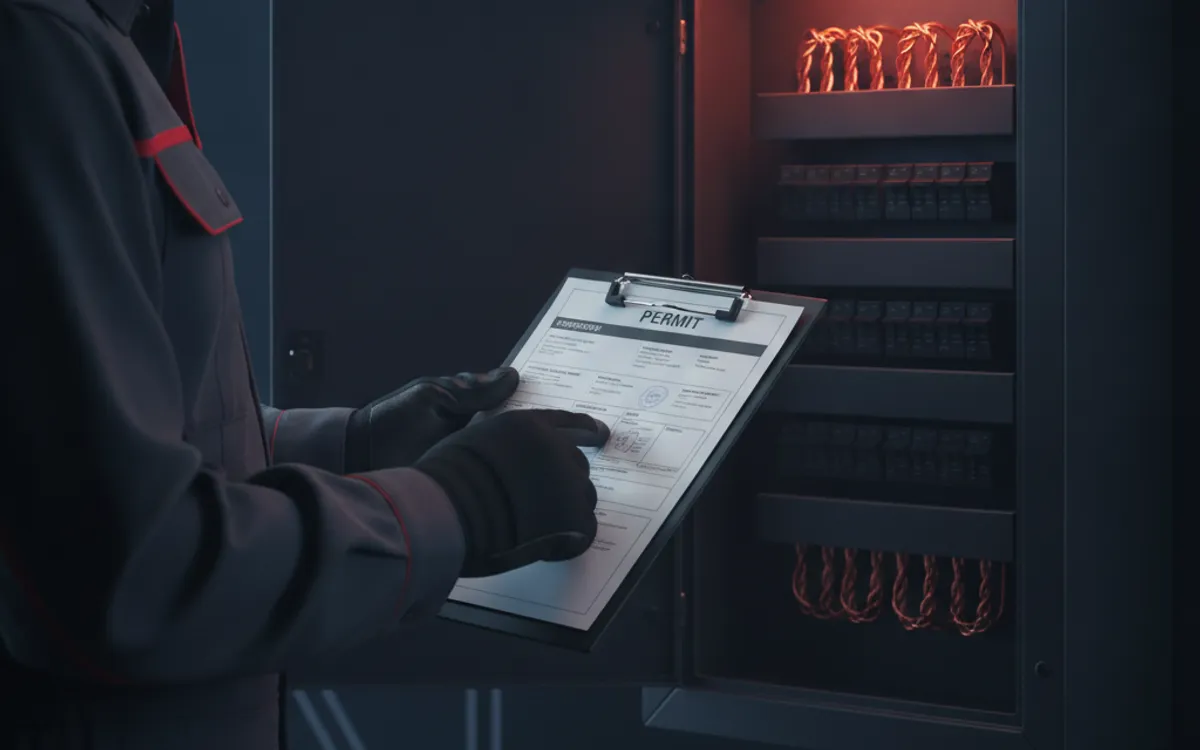
In Calgary, most electrical work beyond like-for-like replacement needs a City electrical permit, and a licensed contractor pulls it under their own qualification. The City of Calgary homeowner electrical permit is $116.50 for eligible homeowner-performed work; when a licensed contractor pulls the permit, the fee is built into your quote and varies with the scope of the job. Either way, it should appear on your quote. A bid that does not mention the permit is either leaving it for you to sort out or leaving it out altogether, and our guide to electrical permits in Calgary explains why that second case can cost you at resale or on an insurance claim.
How to compare electrician quotes fairly
The cheapest total is rarely the best value, and the highest is not automatically the safest. Put the quotes side by side and check them against the same list.
- Is the contractor licensed in Alberta, and will they show you proof of insurance and WCB coverage?
- Are the permit and inspection listed as a line item?
- Does the quote name the work, the breaker and wire sizes, and the major materials?
- Is patching, drywall touch-up and cleanup included, or left to you?
- What is the warranty on labour, and who do you call if something fails in year two?
- Is the price firm, capped, or open-ended?
Is DIY cheaper?
Sometimes on paper, rarely in practice. Alberta allows homeowners to do some of their own electrical work under a homeowner permit, but the work must still be inspected, and mistakes are expensive precisely because they are invisible until they fail. Our post on whether DIY electrical work is legal in Calgary covers what is allowed and where the line sits. For anything involving the panel, a 240V circuit or a basement development, the savings are usually smaller than the risk.
Shock Stop quotes electrical work in Calgary, Airdrie, Cochrane, Chestermere, Okotoks, Strathmore, Rocky View County and Foothills County with the scope spelled out, the permit and inspection handled, and a firm number before we start. If you have a quote in hand and want a second opinion, or a project you want priced properly, reach out and we will walk through your panel and give you a straight answer.
Questions about this
How much per hour is an electrician in Calgary?
Licensed electricians in Calgary commonly charge roughly $100 to $160 per hour in 2026, depending on the company, the time of day and the complexity of the work. Many contractors quote a flat price per job instead of billing hourly, which is easier to compare.
Why is there a minimum service call fee?
A visit has fixed costs before any work starts: travel across the city, a fully stocked truck, insurance and licensing, and the time to diagnose the problem. A minimum charge typically covers the first hour or so on site, and any repair is then quoted or billed on top of it.
Is the electrical permit included in the quote?
It should be. For most work beyond like-for-like replacement, a City of Calgary electrical permit is required and a licensed contractor pulls it under their own qualification. Ask whether the permit and inspection are listed as a line in the quote, so the price you compare is the price you pay.
Why do two electricians quote very different prices for the same job?
Usually they are not quoting the same job. One bid may include the permit, a load calculation, patching and cleanup, and a warranty, while a cheaper one leaves them out. Compare scope line by line before comparing totals.
Do emergency and after-hours calls cost more?
Yes. Evenings, weekends and holidays are usually billed at a premium rate, because crews are pulled off scheduled work. A burning smell, a hot panel or a total loss of power is worth paying that premium for; a dead outlet can usually wait for a regular booking.
Is the cheapest electrician the best deal?
Rarely. A very low quote often means no permit, no inspection, or an unlicensed installer, and unpermitted work can complicate a home sale or an insurance claim later. The goal is the lowest price for work that passes inspection, with a warranty behind it.