What Alberta law requires Calgary landlords to fix, maintain and document electrically — and where the risk concentrates in older rental housing.
If you own or manage a rental property in Calgary, you are legally on the hook for more than just collecting rent — Alberta's Residential Tenancies Act protects electricity as an essential utility a tenant cannot be made to go without, and landlord electrical requirements go beyond simply keeping the lights technically on. A landlord must keep the electrical system safe, functional and in good repair for the length of the tenancy, and cannot let a known hazard sit unaddressed because a tenant hasn't complained loudly enough. That standard applies whether you own one basement suite or a portfolio of rental houses across Calgary, Airdrie and Cochrane.
Here is what Alberta law actually expects of you as a landlord, where the electrical risk actually concentrates in Calgary's rental housing stock, and how to get ahead of it before a tenant complaint — or a bad home inspection — forces the issue.
What the law actually requires
The Residential Tenancies Act requires a landlord to keep rental premises in a good state of repair and fit for habitation throughout the tenancy, and electricity is treated as a vital service alongside heat and water — a landlord cannot cut off or allow the loss of a vital service, even as leverage in a rent dispute. Alberta's Minimum Housing and Health Standards go further, setting baseline expectations for safe, functioning electrical systems and code-compliant wiring in habitable space. None of this requires a tenant to prove a fire risk before a landlord has to act — a genuinely unsafe electrical condition is the landlord's problem the moment it exists.
“Electricity is a vital service under Alberta law — a landlord cannot let it fail quietly, and cannot use it as leverage against a tenant. A dangerous outlet or an overloaded panel is not a someday problem; it is today's.”
Emergency vs. routine — how fast is fast enough?
Alberta law doesn't set fixed repair deadlines by the hour — it requires a landlord to act within a reasonable time — but here is the response standard we'd defend in front of an adjudicator. Not every electrical complaint carries the same urgency, and knowing the difference protects both sides. A genuine electrical emergency — a breaker that won't reset and leaves a unit without power, a scorched outlet, a burning smell, exposed wiring — calls for a same-day or next-day response; leaving a tenant without power overnight through a Calgary winter is not a defensible wait. Routine repairs reasonably fall within a one-to-two-week window, though a written, dated repair request is worth keeping on file regardless of urgency.
- Same-day: no power to a unit, a breaker that trips repeatedly and won't stay reset, any burning smell or visible arcing.
- Within 24–48 hours: a scorched or hot outlet, a GFCI that won't reset, exposed or damaged wiring.
- Within one to two weeks: a single dead outlet, a flickering fixture, a switch that no longer works cleanly.
- Ongoing: keep every repair request and its resolution date on file — it is your record if a dispute ever reaches the Residential Tenancy Dispute Resolution Service.
Where the risk actually concentrates in Calgary rentals
Calgary's rental stock skews older than its ownership-occupied housing, and that shows up directly in the electrical calls we get from landlords and property managers. A rental house built between 1965 and 1975 may still have aluminum branch wiring, which is not automatically dangerous but does need its connections checked and, where required, professionally pigtailed or rewired — we covered the specifics in our guide to aluminum wiring in Calgary homes. Homes from the same era, and into the 1980s, sometimes still carry a Federal Pioneer panel with Stab-Lok breakers that have a documented history of failing to trip when they should, a risk we detail in our piece on Federal Pioneer panels in Calgary. Character homes built before 1950 can still have knob-and-tube wiring buried in the walls, covered in our knob-and-tube guide, and older units sometimes still run on ungrounded two-prong outlets, which we walk through in our two-prong outlet article. Any one of these findings is common enough in an older Calgary rental that it is worth knowing about before a tenant finds it for you.
Multi-unit and commercial landlords: same standard, more scale
The obligation doesn't shrink because you're managing eight units instead of one, or a commercial tenancy instead of a house. Electrical rooms, unit sub-panels and common-area lighting in a multifamily building all still need to be safe, maintained and permitted — we plan and permit that scale of work in our multifamily and new-construction electrical guide. Commercial landlords carry a related obligation: keeping base-building electrical safe while a tenant fit-out is underway, which is exactly where a tenant improvement can quietly drift out of code if nobody is tracking the permit, covered in our commercial tenant fit-out guide. The paperwork gets more complex at scale; the standard does not change.
Smoke alarms, GFCI protection, and the suite wrinkle
Two safety systems get checked hardest at inspection time, and both are the landlord's responsibility to maintain, not the tenant's to request: interconnected smoke alarms, and GFCI protection in kitchens, bathrooms and outdoor outlets. If a fire starts in one part of the home, every interconnected alarm needs to sound — a single stand-alone battery alarm in the hallway does not meet that bar in most rental configurations, and we go into what GFCI and AFCI protection actually cover in our dedicated code guide. A legal secondary suite raises the requirement further: the suite and the main dwelling need alarms interconnected across both units, plus dedicated circuits and sub-panelling that keep the suite's electrical properly separated from the main home, which we cover in our basement suite and secondary suite guide. If you are renting out a basement suite that predates that standard, this is one of the fastest ways an aging rental turns into a liability.
Disclosure, documentation, and getting ahead of it
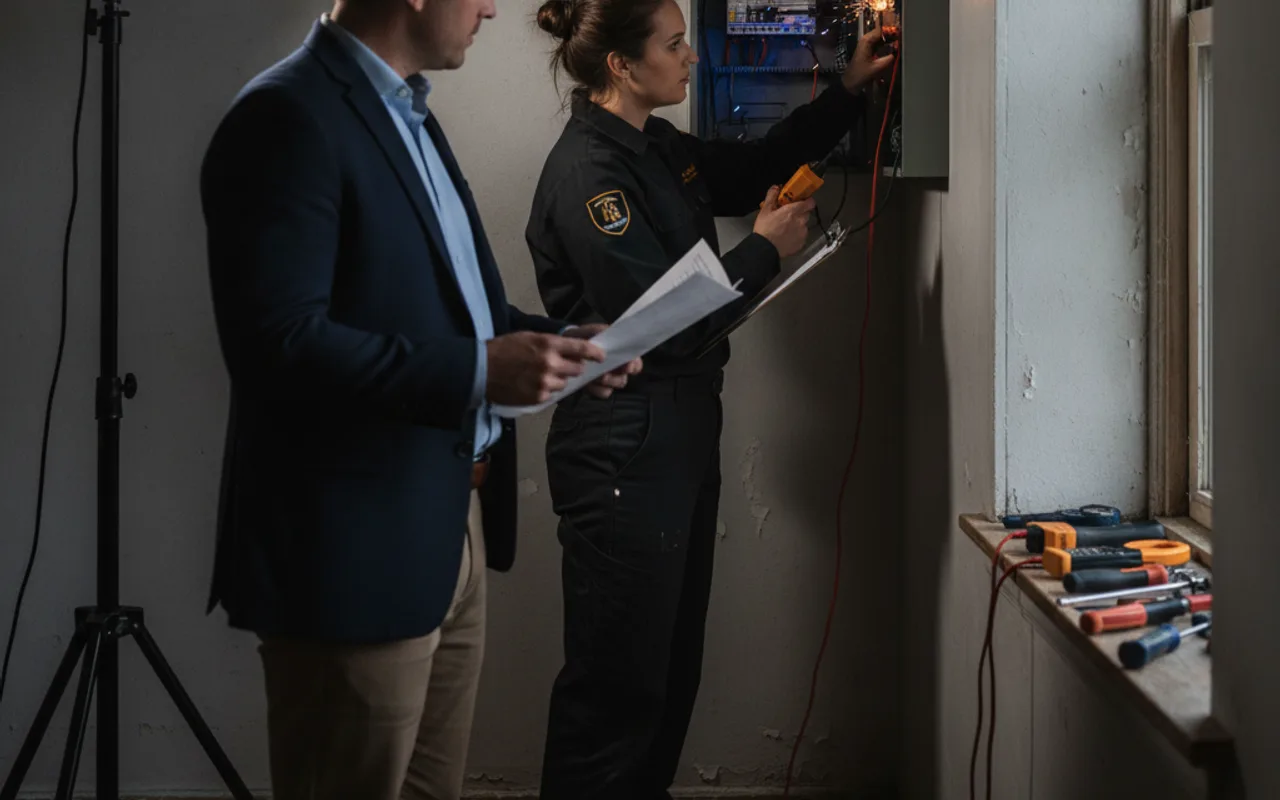
Alberta does not require a landlord to hand a tenant an electrical inspection report before move-in, but a documented, professional look at the panel and wiring before you list a unit protects you two ways at once: it gives you a paper trail if a dispute ever reaches the Residential Tenancy Dispute Resolution Service (RTDRS), and it flags the kind of unpermitted work that can complicate an insurance claim later. Older rental houses sometimes carry electrical modifications — an added outlet, a suite conversion, a panel swap — done without a City of Calgary electrical permit before you owned the property, which is exactly the gap we walk through in our overview of when a Calgary electrical permit is required. That work is now your liability as the landlord of record, whether or not you did it yourself. A pre-tenancy electrical assessment costs far less than the liability it prevents, and it turns a vague sense of an older house into a documented, specific list of what does and doesn't need attention.
“A pre-tenancy electrical assessment does not just protect the tenant — it is the paper trail that protects you if anything is ever disputed later.”
Questions Calgary landlords ask us
Who pays for electrical repairs in a Calgary rental? In almost every case, the landlord does — normal wear, failures and safety issues in the fixed electrical system are the landlord's maintenance responsibility, not the tenant's. A tenant is generally only on the hook for damage they caused themselves, like a smashed outlet cover.
Can a landlord shut off the power over unpaid rent? No. Alberta law protects vital services from being used as leverage in a rent dispute — a landlord who cuts power to force a tenant out is taking on serious legal risk, not solving a collections problem.
What can a tenant do if a landlord won't fix a dangerous outlet or breaker? After a documented, reasonable request goes unanswered, a tenant can apply to the RTDRS for an order compelling the repair. It rarely gets that far when the request is handled promptly — which is the whole argument for fixing it fast.
Do I have to tell a tenant about aluminum wiring or an old panel before they move in? There is no blanket legal disclosure requirement, but an unsafe condition you know about and don't address is a very different position to be in than one you documented and had assessed. If it has been inspected and, where needed, remediated, you are not sitting on a hidden liability — you are renting out a home you can stand behind.
Does the same standard apply to a rental acreage or a rural property? Yes, with an extra layer — a well pump, a shop or a standby generator on a Rocky View or Foothills rental property all sit on the same electrical system a tenant depends on, covered in our guide to acreage electrical costs in Calgary.
This is a general summary of Alberta's electrical safety expectations for landlords, not legal advice — for a specific dispute, confirm current requirements with the RTDRS or a lawyer.
If you own or manage rental property in Calgary, Airdrie, Cochrane, or anywhere across the region, the team at Shock Stop can walk an older unit's panel and wiring, flag exactly what needs attention before a tenant or an inspector finds it, and handle the permit on anything that needs fixing properly. Reach out for a landlord electrical assessment before your next tenancy starts.