Flickering or dimming lights in your Calgary home? Learn which causes are harmless, which signal a loose neutral or failing connection, and when to call.
Flickering lights in a Calgary home that affect one fixture usually mean a bad bulb, dimmer, or loose socket. Flickering or dimming across several rooms, especially when a big appliance starts, points to a loose neutral, a failing connection at the panel or meter, or an overloaded service, and needs a licensed electrician promptly.
Flickering lights in a Calgary home have a short list of causes, and the key is whether the flicker is in one fixture or across the house. One flickering light is usually a bulb, a dimmer, or a loose socket. Lights that flicker or dim in several rooms, especially when the furnace, dryer, or a space heater kicks on, point to a loose neutral, a failing connection at the panel or meter, or an overloaded service. That second group is the one that deserves a call to a licensed electrician.
“One flickering bulb is a nuisance. Lights that flicker across several rooms are a symptom, and the cause is usually a loose connection somewhere upstream.”
Here is a straight, practical guide to telling the harmless flickers from the ones that matter, what a Calgary electrician checks, and when it is worth a call.
Start here: how widespread is the flicker?
Before anything else, notice the pattern. It narrows the cause faster than any tool.
- One fixture or one room only: almost always the bulb, the dimmer, the socket, or a loose connection at that one fixture.
- One circuit (a few outlets and lights on the same breaker): a loose connection on that circuit, a failing switch, or a worn receptacle.
- Whole house, dimming together: a problem upstream of your branch circuits, such as the neutral, the panel, the meter base, or the service wires.
- Only when a large appliance starts: voltage drop from a heavy load, which can be normal in mild form or a sign of a weak connection in stronger form.
Harmless causes (check these first)
Most flicker calls turn out to be simple, and it is worth ruling these out before assuming the worst.
- A loose or failing bulb. Tighten it or swap it. If the new bulb flickers in the same fixture, move on.
- An LED on an old dimmer. Dimmers built for incandescent bulbs often cannot hold a stable output with a low-wattage LED load. An LED-rated dimmer typically fixes it. If you are adding LED pot lights, see our guide to [pot light installation costs in Calgary](/blog/pot-light-installation-cost-calgary).
- Cheap or mismatched LED bulbs, especially in enclosed fixtures that trap heat.
- A worn switch or dimmer that has lost its internal contact tension.
- A brief, small dip when a large motor starts. A fridge compressor, furnace blower, or sump pump can cause a momentary dim. A quick dip that settles is common. A heavy, repeated dip is not.
Causes that need an electrician
These are the ones that can generate heat inside a wall, a box, or your panel, which is why they are not a wait-and-see problem.
- A loose or open neutral. When the neutral connection is poor, voltage swings between the two halves of your 120/240V service. Some lights run bright while others dim, and appliances can see damaging voltage. It often shows up as lights that get brighter when something else switches on.
- Loose connections at the panel or a breaker. A connection that is not tight heats under load and arcs, which creates flicker and can damage the breaker and bus.
- Failing receptacles and back-stabbed connections. Older devices with push-in connections loosen over time.
- Aluminum branch wiring in older homes, where loose terminations are a known weak point. See our guide to [aluminum wiring in Calgary](/blog/aluminum-wiring-calgary).
- A deteriorating meter base or service connection. This is the stretch of equipment between the utility lines and your panel.
- An overloaded service. Add an EV charger, a hot tub, or a basement suite to a small 100A service and the lights can dim every time a large load runs.
The signs that make it urgent
Flickering on its own is a reason to book a visit. Flickering plus any of the following is a reason to stop using the circuit and call right away.
- A burning, hot-plastic, or fishy smell near an outlet, switch, or panel.
- Outlet or switch plates that feel warm, or show brown or black discolouration.
- Buzzing, crackling, or sizzling from a fixture, outlet, or the panel.
- Lights that get noticeably brighter or dimmer when you turn something else on, in more than one room.
- A breaker that trips repeatedly. Our guide to [why a breaker keeps tripping](/blog/breaker-keeps-tripping-calgary) explains the common causes.
We go deeper on the full list in our warning signs of unsafe wiring guide. If the symptoms match, switch off the affected breaker and do not keep using the circuit until it has been checked.
Why Calgary homes in particular
A few local conditions come up again and again. Many Calgary neighbourhoods built from the 1960s to the 1980s have 100A services that were sized long before electric vehicles, hot tubs, and finished basements. Add loads to that service and voltage dips become more noticeable. Temperature swings are also hard on connections: Calgary winters and chinook swings make metal expand and contract, and a connection that was marginal can loosen over the years. And in winter, space heaters, block heaters, and furnace blowers all run at the same time, so a weak spot gets tested exactly when the demand is highest. Our winter electrical safety checklist is a good companion read.
Is it your house or the utility?
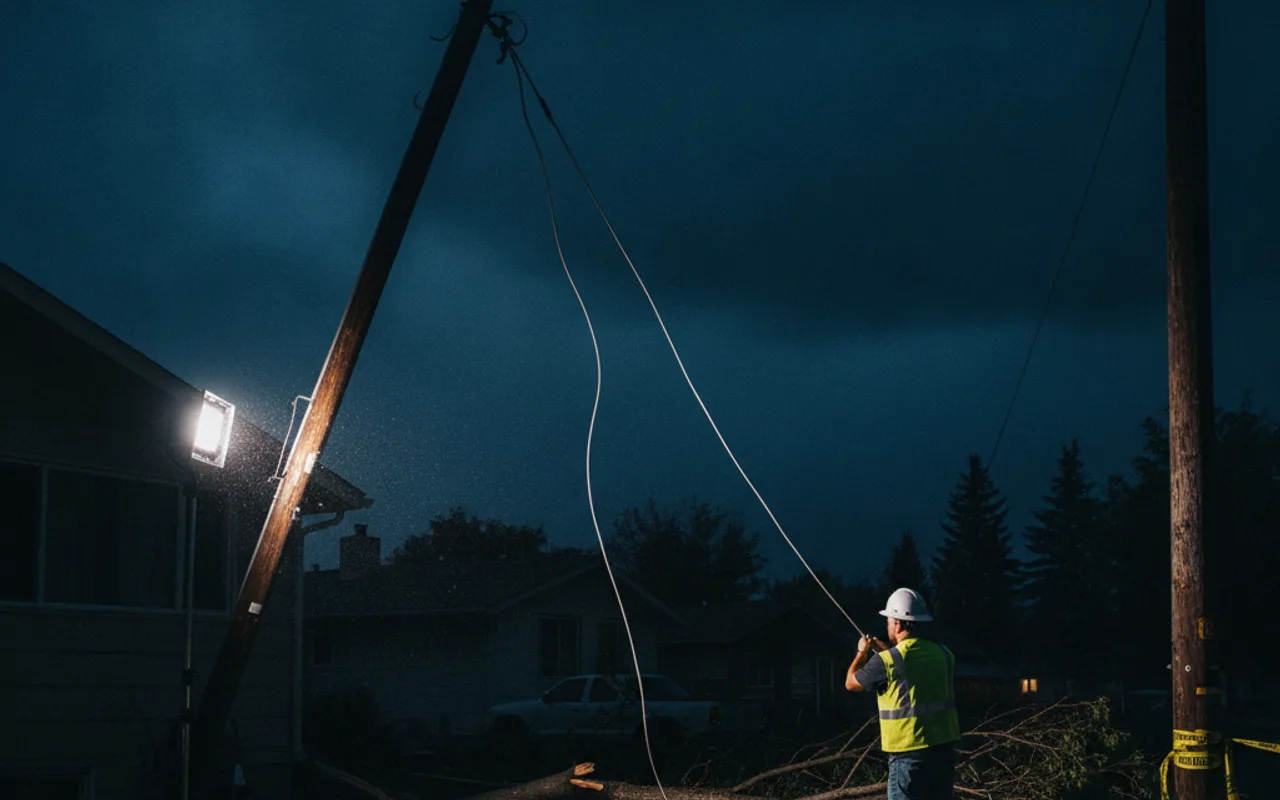
Sometimes the cause is not inside your walls. Equipment on the utility side of your meter belongs to the utility, which is ENMAX in most of Calgary. If your lights flicker and so do your neighbours, or the flicker happens during storms or when wind shakes the overhead lines, it may be on the utility side. An electrician can tell the difference by measuring voltage at the panel and checking the connections on your side. If the fault is on the utility side, you will be pointed to the utility to report it. If it is inside the meter base or your panel, that is your side to fix.
What an electrician actually does
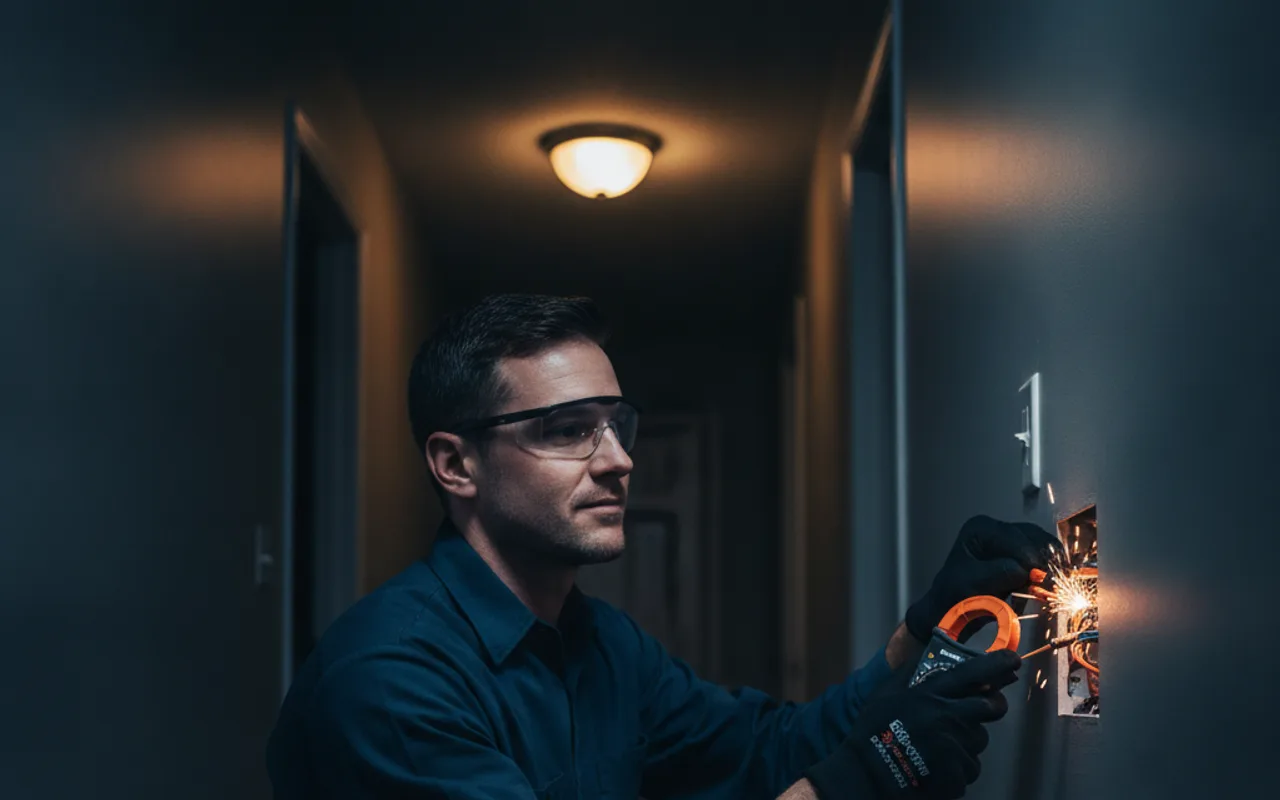
A proper diagnosis is methodical. Expect your electrician to ask where and when it flickers, then work upstream.
- Check the bulb, dimmer, and fixture at the problem location.
- Test voltage at the outlets and at the panel, with and without large loads running.
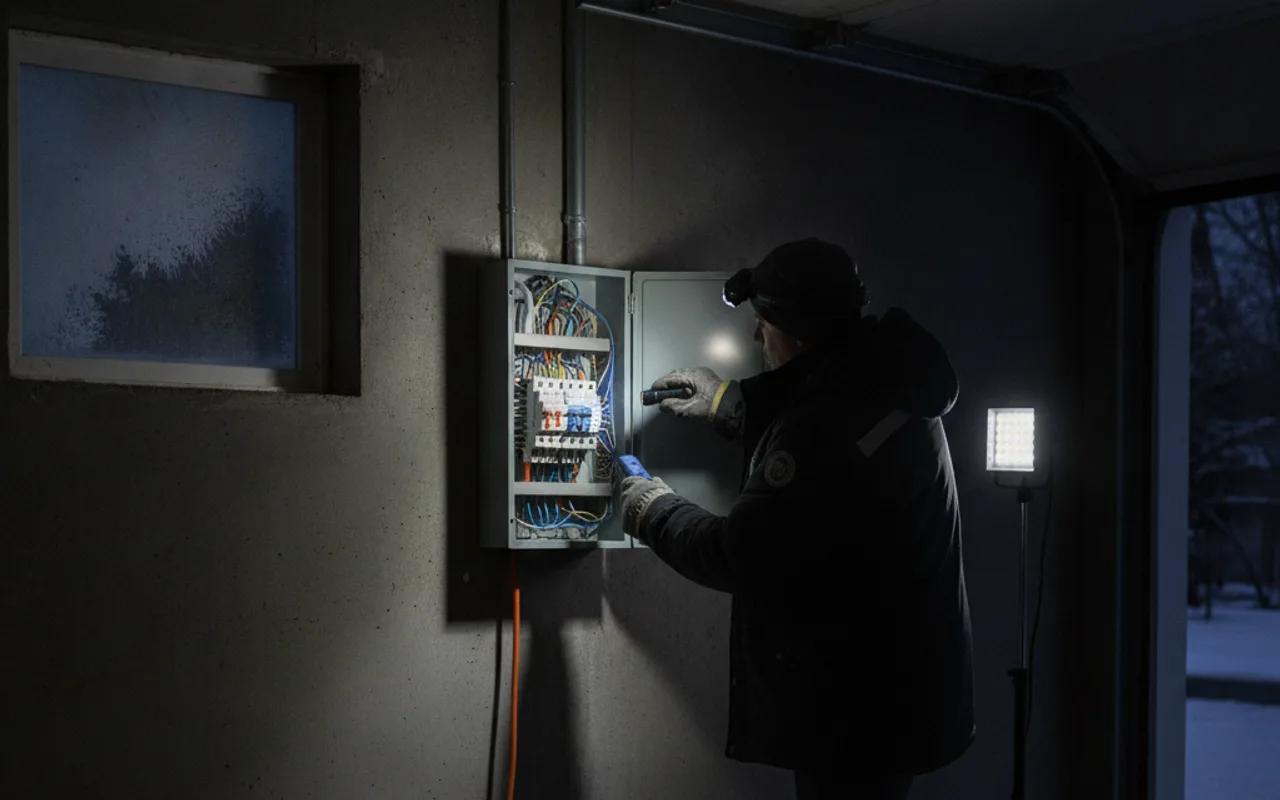
- Inspect and torque the connections at the panel, breakers, and the neutral and ground bars.
- Inspect the meter base and the service entrance for corrosion, heat damage, or loose lugs.
- Check for back-stabbed or worn devices on the affected circuit.
Where we find a worn panel or an undersized service as the underlying problem, the fix is a panel and service upgrade, which needs a City of Calgary electrical permit and inspection. Smaller fixes, such as replacing a device or tightening connections, fall under our service and repair work. See our guide to electrical permits in Calgary for what needs one.
Can I fix it myself?
Swapping a bulb or an LED-rated dimmer is a reasonable DIY task if you turn the breaker off first. Anything involving the panel, the meter, the neutral, or wiring inside the walls is work for a licensed electrician. A panel carries live parts even with the main breaker off, and a loose neutral can put dangerous voltage on appliances. This is not the place to improvise.
“If the flicker is in more than one room, treat it as a symptom, not a nuisance. Loose connections heat up, and heat is what starts electrical fires.”
If your lights are flickering, dimming, or surging and you cannot pin it to a single bulb, the team at Shock Stop can trace it to the source, whether that is a worn device, a loose connection, or a service that has outgrown your home. Reach out for a troubleshooting visit with a straight quote, and the permit handled if one is needed, anywhere in Calgary, Airdrie, Cochrane, Chestermere, Okotoks, or the surrounding communities. If you smell burning or see scorching, call right away.
Questions about this
Why do my lights flicker when the furnace or fridge starts?
A brief dip when a large motor starts is normal on many circuits. If the dip is obvious, repeats, or affects the whole house, it can point to a loose connection or an undersized service and is worth having checked.
Are flickering lights dangerous?
A single flickering bulb is usually harmless. Lights that flicker in several rooms, brighten and dim together, or come with a burning smell, warm outlets, or buzzing can indicate a failing connection that overheats, and should be treated as urgent.
Can LED bulbs flicker on their own?
Yes. LEDs flicker or buzz on older dimmers built for incandescent bulbs, and cheap bulbs can flicker even without a dimmer. Swapping to an LED-rated dimmer or a better bulb usually fixes it.
Who do I call if the flicker is from the utility side?
If the problem is at the meter or the service wires coming to your home, the utility owns that equipment. An electrician can confirm where the fault is, and the utility is contacted for anything on their side of the meter.
How much does it cost to fix flickering lights in Calgary?
A dimmer or socket swap is usually a modest service call. Tracking down a loose neutral or tightening panel connections takes diagnostic time, and a service or panel upgrade is a larger project that is quoted after an on-site assessment.