A practical pre-winter checklist for Calgary homes: panel readiness, block heaters, holiday lighting overload, generator safety, alarms and surge protection.
Calgary's cold snaps stress panels, block heater circuits and outdoor outlets harder than summer ever does. Test smoke and CO alarms, confirm your block heater runs on its own GFCI circuit, never backfeed a generator into your panel, and consider a panel-mounted surge protector before winter storms start cycling the grid.
A Calgary winter puts more stress on your home's electrical system than any other season — block heaters running every night, space heaters and holiday lights doubling up on the same circuits, and cold snaps that push panels, meters and outdoor outlets harder than they see the rest of the year. A short winter electrical safety checklist for your Calgary home catches most of what actually causes an emergency call in January: an untested smoke alarm, an overloaded circuit, an outdoor outlet without GFCI protection, or a generator wired in a way that is genuinely dangerous. None of it takes more than an evening to check.
“Most of the electrical calls we get in January are for problems that existed all fall — a breaker that was already tripping in October, an outdoor outlet that was never GFCI-protected, a block heater sharing a circuit with something else. A five-point walkthrough before the first hard freeze catches almost all of it.”
Start with the panel and breakers
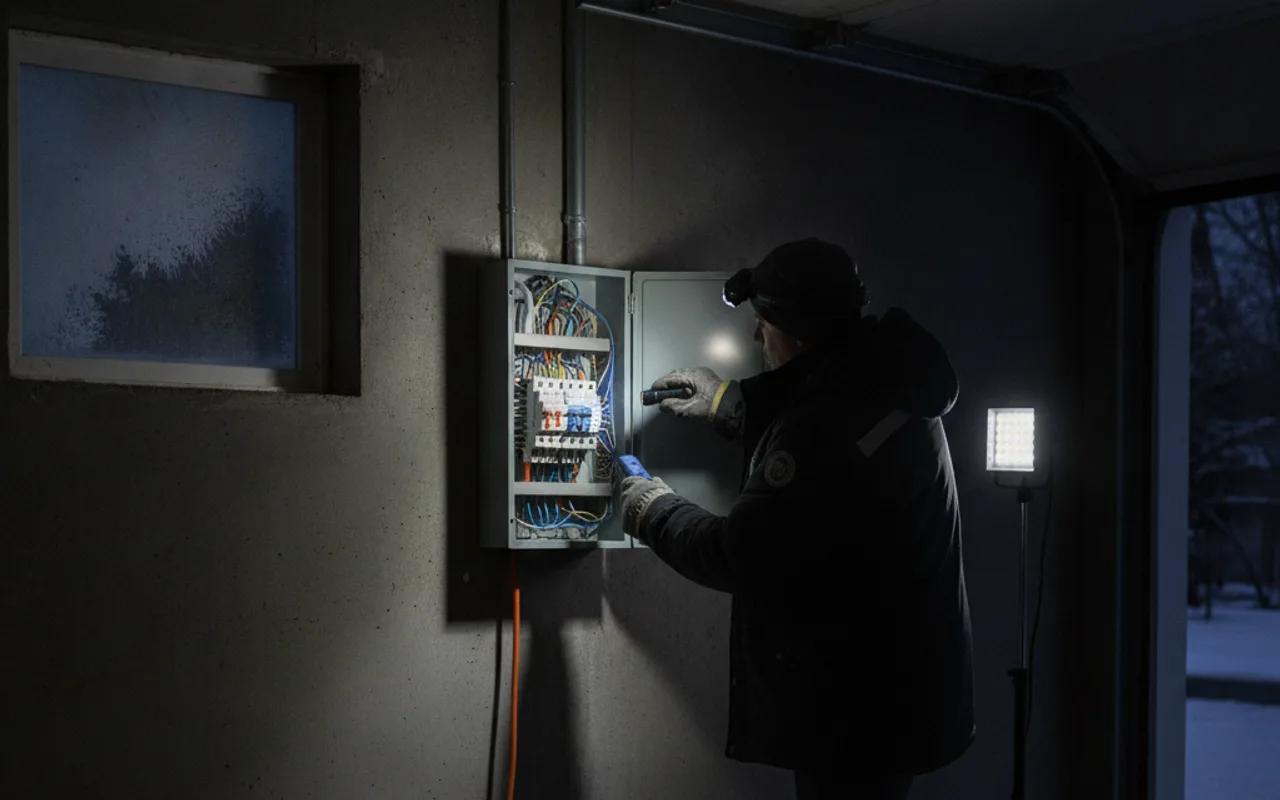
Your electrical panel does not get a season off. Repeated freeze-thaw cycling over the years can loosen lugs and connections, and a panel running warm loads in summer has less thermal margin to spare once winter adds a block heater, a shop heater and holiday lighting on top of everything already running. If a breaker has been tripping occasionally all fall, or your panel is an older 60A or 100A service that has picked up a block heater, a hot tub, or a finished basement since it was built, winter is usually when that margin finally runs out. If a circuit trips every time you add a space heater or a run of lights, that is not bad luck — see our guide on why breakers keep tripping in Calgary homes for the real causes, and whether it means the panel itself needs attention rather than just a smaller heater.
- Open the panel door and look for anything discoloured, melted, or loose — call an electrician before winter if you see any of it.
- Note which breakers already trip occasionally; that is useful information for a service call, not something to just keep resetting.
- If your home still runs a 60A or 100A service that has picked up a block heater, hot tub, or shop since it was built, ask whether the panel has room for winter's added load — a panel upgrade is one of the more common outcomes of a fall assessment.
Block heaters and extension cords
A block heater is a small, steady load, but it runs for months at a time — often through an extension cord fed out a window or a garage door gap that gets colder and more brittle every week. Cheap outdoor-rated cords crack at the connector in deep cold, and a block heater sharing a circuit with garage lighting or a garage door opener is a common source of a breaker that trips only on the coldest mornings. The code answer is a dedicated, GFCI-protected exterior or garage receptacle sized for the block heater alone — see our block heater outlet installation guide for what that costs and why plugging into a shared outlet is a mistake we see every fall. EV owners should add one more line to the walkthrough — our guide to why EV charging slows down in a Calgary winter covers preconditioning and circuit sizing that keep charging reliable in deep cold.
The space heater and holiday lighting overload
Space heaters and holiday lights are both temporary, seasonal loads, and Calgary homeowners routinely run them on the same circuit at the same time a laptop charger, a TV and a router are already drawing power. A 1500-watt space heater alone pulls close to 12.5 amps — more than half of what a standard 15-amp circuit can carry before anything else is plugged in. Add a string of older incandescent holiday lights and it does not take much to trip a breaker, or worse, to keep resetting one that is trying to protect an overloaded circuit.
- Run space heaters on their own circuit where possible, not shared with lighting or electronics.
- Switch to LED holiday lights — they draw a fraction of the current of older incandescent strings.
- A breaker that trips repeatedly is doing its job; resetting it again and again without finding the cause is the actual fire risk.
Static shocks: dry air, or a wiring problem?
Static shocks off light switches and door handles spike every winter in Calgary as forced-air furnaces dry out indoor humidity — for almost everyone, that is the whole explanation, and it is not an electrical fault. The exception worth paying attention to is a shock that only ever happens at one specific switch, receptacle or appliance. A pattern isolated to a single fixture, rather than everywhere in the house, points to a bonding or grounding issue at that location and is worth having looked at rather than solved with a humidifier.
Backup power without backfeeding your neighbourhood
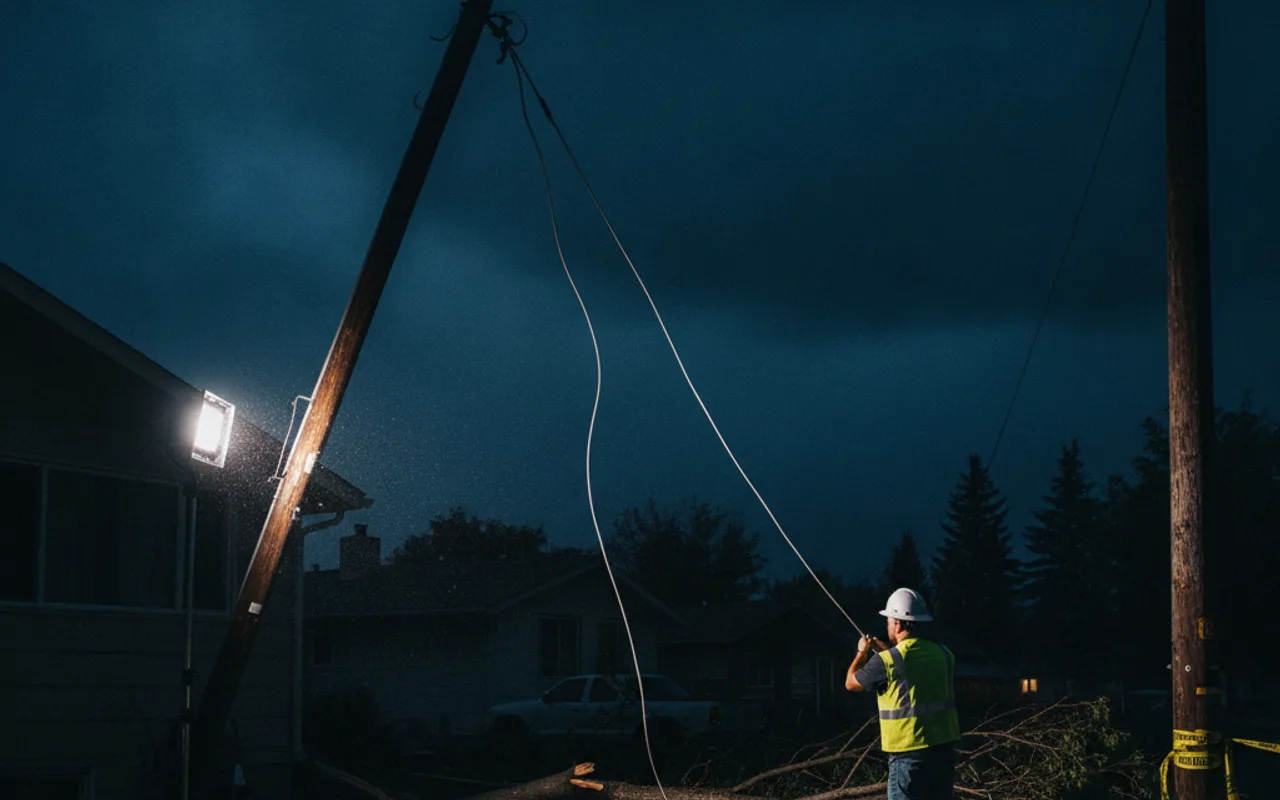
Outages get longer and more common through a Calgary winter storm, and a portable generator is a reasonable answer — plugged in correctly. Backfeeding a generator into your house through a dryer outlet, the so-called suicide cord, sends power backward through your meter and can energize lines a utility crew believes are dead. It is illegal, it is genuinely dangerous to line workers, and it is one of the few electrical shortcuts that can kill someone who isn't even in your house.
“There is no safe version of backfeeding a generator through a dryer outlet. An interlock kit or a transfer switch is what makes it physically impossible for your generator and the grid to be connected to your panel at the same time — and it costs far less than the alternative.”
Our backup generator installation guide covers interlock kits, automatic transfer switches, sizing and permit costs in detail. It matters even more on acreages and rural properties around Rocky View County and the Foothills, where a well pump, a shop, and sometimes livestock heaters all depend on power that can be out for longer than a typical city outage.
Surge protection before the storms start
Winter Chinooks and grid-switching events cause far more surge damage in Calgary than a direct lightning strike ever does, and most home insurance policies do not cover surge damage to appliances and electronics. A Type 2 surge protective device installed at your panel is a one-time upgrade, typically $300 to $700 installed, that protects your furnace control board, your EV charger, and everything else in the house from a single point rather than leaving it to a handful of point-of-use power bars. Our whole-home surge protection guide has the full breakdown on cost and coverage.
Smoke and CO alarms: the five-minute check
Test every smoke and CO alarm in the house now, before furnace, fireplace and block heater use ramps up for the season — a battery that quietly died in July is easy to miss until an alarm that should go off in January doesn't. Depending on your home's age and renovation history, Alberta code may require interconnected, hardwired alarms rather than standalone battery units; our guide to smoke and CO alarm requirements in Calgary covers what applies to your home.
The five-point walkthrough
- Panel: check for discolouration or loose connections, and note any breaker that trips occasionally.
- Block heater: confirm it runs on its own dedicated, GFCI-protected circuit, not shared with garage lighting or an opener.
- Space heaters and holiday lights: spread the load across circuits and switch to LED strings where you can.
- Backup power: never backfeed through a dryer outlet — an interlock kit or transfer switch is the only safe method.
- Alarms and surge protection: test every smoke and CO alarm and consider a panel-mounted surge protective device before the first big storm.
None of this requires tearing into walls — most of it is a walkthrough with a flashlight and, where something turns up, a single service call before the cold really sets in. If your panel is older, your block heater is on a shared circuit, or you just want a professional set of eyes on your home before winter, the team at Shock Stop can run through all of it in one visit — diagnosis, a straight quote, and the permit handled if any work is needed. Reach out to book a pre-winter electrical assessment anywhere from Calgary to Airdrie, Cochrane and the surrounding communities.
Questions about this
Can Calgary's extreme cold actually damage an electrical panel or outdoor outlets?
Yes, indirectly. Repeated freeze-thaw cycling can loosen panel lugs and meter-base connections over the years, weatherproof outdoor outlet covers can crack in deep cold, and cheap outdoor extension cords turn brittle at -20°C and below. None of this happens overnight, but a panel that has never been opened and inspected in a decade is a reasonable thing to have checked before a hard winter.
Why do I get static shocks touching light switches and door handles all winter?
For almost everyone, that is dry indoor air from a forced-air furnace running non-stop, not a wiring fault — humidity drops sharply in a Calgary winter and static builds up on you, not in the wall. The exception is a shock that only ever happens at one specific switch, receptacle, or appliance; that pattern points to a bonding or grounding issue and is worth having looked at.
Is it safe to run a space heater on an extension cord in an older Calgary home?
Only briefly, and only on a cord rated for the heater's full amperage — a dedicated outlet is the better answer. Extension cords add resistance and heat under sustained load, and older homes often have circuits already close to capacity once a heater, holiday lights, and normal loads are running together. If you find yourself relying on a heater every winter, that circuit is telling you something.
Can I leave holiday lights plugged into an exterior outlet all winter?
Yes, as long as the outlet is GFCI-protected and has a proper in-use weatherproof cover — most homes built or renovated in the last couple of decades already have this. An older exterior outlet without GFCI protection, or a light string drawing more than the outlet is rated for, is the setup that trips breakers or, worse, does not trip when it should.
Is it legal to plug a portable generator into my house to power it during an outage?
Not by backfeeding through a dryer outlet — that sends power backward through your meter onto lines a utility crew may believe are dead, and it is illegal and dangerous. The safe way is an interlock kit or a transfer switch installed on your panel, which makes it physically impossible for the generator and the grid to be connected at the same time.
Should I test smoke and CO alarms before winter?
Yes — test every alarm and replace batteries now, before furnace, fireplace, and block heater use ramps up for the season. Depending on a home’s age and renovation history, Alberta code may require interconnected, hardwired alarms rather than standalone battery units, and a battery that quietly died in July is easy to miss until an alarm that should go off in January doesn’t.