What a dedicated block heater outlet costs in Calgary, the 2021 code change that requires GFCI protection, and why the outlet on your garage wall may not be safe to use.
If you park outside through a Calgary winter, a block heater is not optional — it is what keeps your engine block warm enough to start without straining the battery and the starter at -30°C. What a lot of homeowners do not realize is that plugging a block heater cord into just any exterior outlet is not code-compliant, and it is often not even safe. A proper block heater outlet installation in Calgary means a dedicated circuit sized to the load, a GFCI-protected receptacle — required under the Canadian Electrical Code since a 2021 update closed a long-standing exemption — and, in most cases, a City of Calgary electrical permit. Here is what the job actually involves, what it costs, and why the outlet already on your garage wall or exterior siding might not be doing its job safely.
“A dedicated block heater outlet in Calgary typically runs $250 to $450 installed — a new circuit to a weatherproof, GFCI-protected exterior receptacle, permit included. A longer run or a panel that is already full moves that number up.”
Why "just plug it into any outlet" is a bad idea
A block heater draws a steady 400 to 1,000 watts depending on engine size — roughly 3 to 8 amps at 120V, more for larger trucks and diesel engines — for hours at a stretch, every cold night, for months. That is not a huge load on its own, but it is a continuous one, and continuous loads behave differently than the quick draw of a kettle or a hair dryer. Run it off a shared circuit that already carries a garage freezer, a sump pump, or a string of holiday lights, and you have a recipe for a breaker that trips at 2 a.m. in January — which is exactly when you do not want to be outside troubleshooting a panel. Run it through a household extension cord left out in the weather, and you add a second failure point: cold makes cord insulation brittle, and a cracked cord sitting in snow and slush next to a live connection is a real shock and fire hazard, not a theoretical one.
- A shared circuit means one more thing that can trip the breaker on the coldest night of the year — see our guide on [why breakers keep tripping](/blog/breaker-keeps-tripping-calgary) for the mechanics of an overloaded circuit.
- Extension cords are not rated for continuous, months-long outdoor use in freeze-thaw conditions.
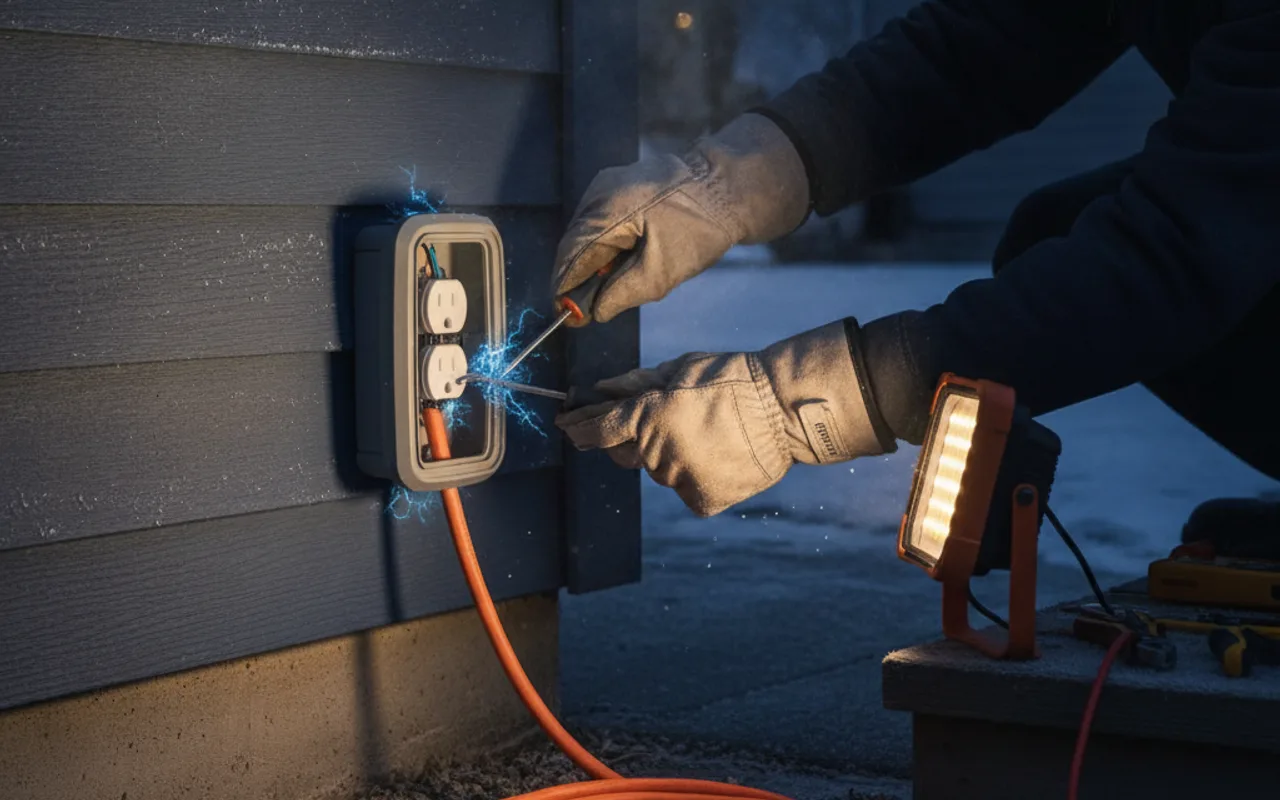
- An outlet without in-use weatherproof covers lets snow and moisture sit directly on live contacts.
- A non-GFCI receptacle gives you no protection if moisture gets into the connection at the cord end.
The 2021 code change: GFCI protection is no longer optional
For years, some outdoor receptacles used specifically for block heaters were treated as a special case under the Canadian Electrical Code, installed without ground-fault protection on the theory that a hardwired block heater cord was a lower-risk connection than a general-purpose outlet. The 2021 edition of the Code closed that exemption. A block heater receptacle is now treated like any other exterior outlet: it requires GFCI protection, full stop. If your home has an older, ungrounded-in-practice or non-GFCI block heater outlet installed before that update, it does not automatically need to be replaced — but any new installation, and any outlet you have an electrician touch for another reason, has to meet the current standard.
“Yes — a block heater outlet needs GFCI protection under the Canadian Electrical Code, the same as any other exterior receptacle. There is no longer a block-heater exemption.”
What the job actually costs in Calgary
Pricing scales mostly with distance from your panel and whether your existing service has room for one more circuit. These are typical Calgary market ranges for a straightforward residential job:
- Short run to an attached garage or a nearby exterior wall: $250 to $450, including the permit and a weatherproof GFCI receptacle.
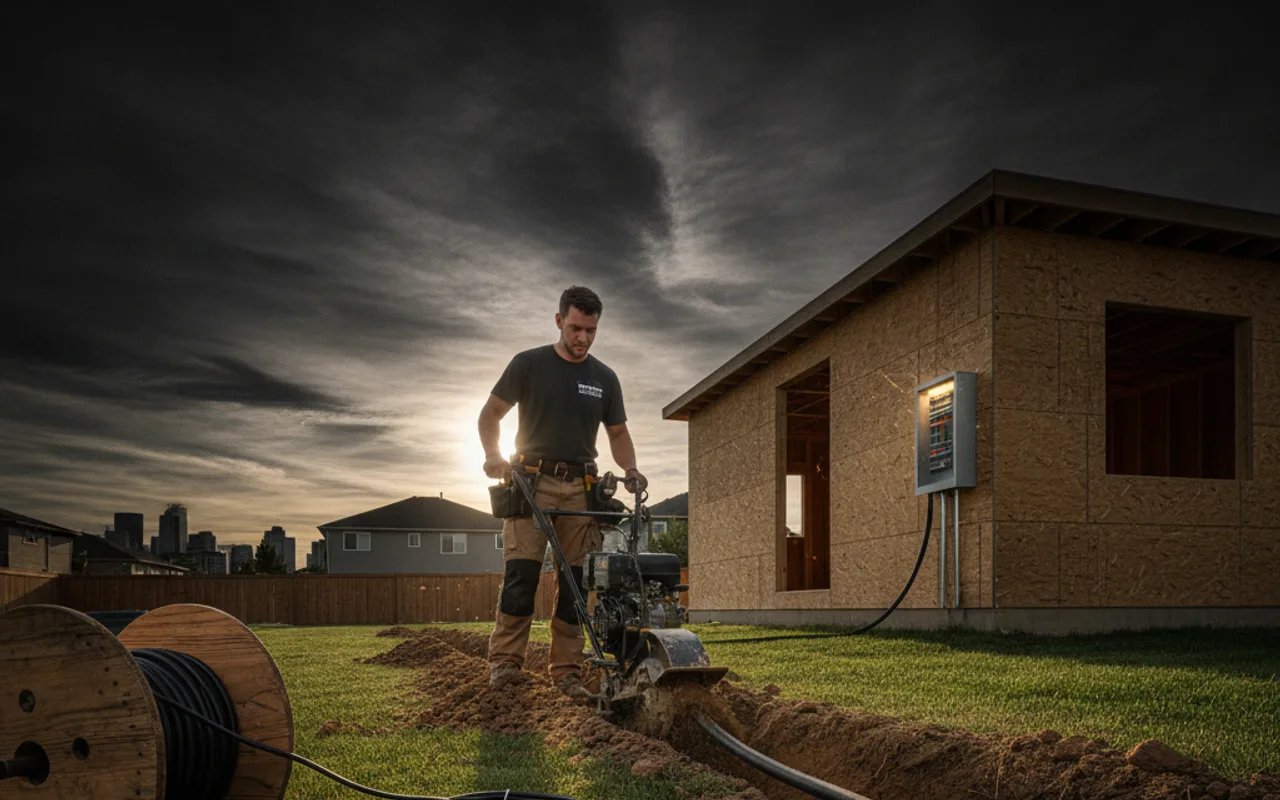
- Longer run to a detached garage, a parking pad, or across a yard: $450 to $800, depending on distance and whether conduit needs to be buried.
- Multiple stalls — a duplex, a shared driveway, or several vehicles at an acreage property: priced per outlet, often with meaningful savings from running them together in one visit.
- Panel at or near capacity: add $1,200 or more for load management or a panel upgrade, the same fork covered in our guide to [panel upgrade costs in Calgary](/blog/panel-upgrade-cost-calgary).
Most Calgary homes on a modern 100A or 200A service have easy headroom for a single block heater circuit — it is a small, well-defined load. Where it gets more involved is acreage properties in Cochrane, Rocky View County, or the Foothills with several vehicles, a detached shop, and a long run of buried conduit to a parking area away from the house. If you also have — or are planning — a Level 2 EV charger in the same garage, keep the two on separate circuits; see our guide to why EV charging slows down in a Calgary winter for why a charger and a block heater sharing one panel is a common source of a breaker that only trips on the coldest nights.
Do you need a permit?
Yes. Installing a new dedicated circuit and receptacle is new electrical work, and it requires a City of Calgary electrical permit — the same requirement that applies to any new outlet, as covered in our overview of Calgary electrical permits. The City homeowner permit fee is $116.50 for eligible homeowner-performed work, but a licensed contractor pulls the permit as part of the job when you hire one, and the inspection that follows confirms the circuit is properly sized, GFCI-protected, and weatherproofed — the details that matter on an outdoor receptacle that sits in snow and ice for half the year.
Timers, cold-weather nuisance tripping, and getting it right
A mechanical or digital timer on the circuit is worth adding — running a block heater for two to four hours before you leave does the job, and running it all night does not warm the engine any faster, it just wastes power. One thing to watch for: GFCI receptacles can occasionally show nuisance tripping in very cold weather if the connection or the cord end has any moisture intrusion, which is more a sign of a worn cord or a loose plug than a fault with the GFCI itself. A properly installed in-use weatherproof cover, a quality cord in good condition, and a receptacle rated for outdoor exposure largely prevent this. If your block heater outlet trips repeatedly, it is telling you something is wrong — do not just keep resetting it and hoping.
Questions Calgary homeowners ask about block heater outlets
Can I plug my block heater into any outdoor outlet? Not safely, and not to code if that outlet is shared with other loads or lacks GFCI protection. A dedicated circuit is the standard for a reason — it is sized for the block heater alone and protected the way an outdoor receptacle needs to be.
Does a block heater outlet need its own breaker? Yes. Sharing a circuit with a garage freezer, holiday lighting, or other loads is the single most common reason block heater circuits trip on the coldest nights, when you need them working the most.
Is it safe to use an extension cord for a block heater? No — not as a permanent solution. Extension cords are not built for months of continuous outdoor use in freeze-thaw conditions, and a cracked cord sitting in snow is a genuine shock hazard. A properly located, weatherproof outlet within reach of your vehicle's cord is the right fix.
How many amps does a block heater draw? Most passenger-vehicle block heaters draw 400 to 1,000 watts (roughly 3 to 8 amps at 120V); larger trucks and diesel engines can draw more. A licensed electrician sizes the circuit and breaker to your actual heater, not a generic guess.
When should I book this before winter? Calgary's first hard cold snaps typically arrive in October, and electricians book up fast once the temperature drops and everyone realizes their outlet is not working the way they assumed. Booking in September or early October, before the rush, means the job is done and inspected before you actually need it.
One outlet, done properly, for the whole winter
A block heater outlet is a small job compared to a panel upgrade or a suite build, but it is exactly the kind of small job that is easy to get wrong with a hardware-store extension cord and a shared circuit — and unpleasant to discover is wrong at -30°C. From attached garages in the city to multi-stall driveways on acreage properties around Cochrane and Rocky View County, the team at Shock Stop installs block heater outlets the way the code actually requires: a dedicated circuit, a proper GFCI receptacle, weatherproofed, permitted, and inspected. Reach out before the first cold snap and we will get it done right the first time.