What a home sauna heater needs electrically in Calgary: circuit sizing by kilowatt, whether GFCI applies, permit rules, and realistic installation cost.
A home sauna heater needs its own dedicated 240V circuit sized to its kilowatt rating, not a generic rule of thumb — commonly a 30A breaker for a 4.5–6kW heater, 40A for 8kW, and up to 50A for 9kW and larger. Unlike a hot tub, a dry sauna heater usually does not need GFCI protection on its own circuit. The City of Calgary requires an electrical permit for the new circuit, and a straightforward install typically runs $600 to $1,800 — more if your panel needs a sub-panel or upgrade first.
Home saunas have gone from a rare luxury build to one of the more common renovation requests we get across Calgary, and the first real question is almost always electrical, not design: can my panel actually handle this? The short answer to sauna electrical requirements in Calgary is that almost every residential sauna heater needs its own dedicated 240-volt circuit, sized to the heater's exact kilowatt rating rather than a rule of thumb, installed and hardwired by a licensed electrician who pulls a City of Calgary electrical permit. Get that part right before the cabin is even built, and the rest of the install is straightforward. Get it wrong, and you end up with a heater that nuisance-trips a shared breaker, or a wiring job an inspector sends back.
Why sauna wiring isn't the same as hot tub wiring
People often ask us about sauna wiring in the same breath as a hot tub, and the two get mixed up for good reason — both are big 240V loads people add to a backyard or basement at the same time. But the code treats them very differently. A hot tub or pool circuit is wet-location equipment: it needs bonding of every metallic part, a GFCI-protected disconnect within sight of the water, and a 240V circuit sized to the pump and heater load together — the full picture is in our hot tub wiring guide. A sauna heater runs dry, radiant heat instead, which changes the requirements — no bonding grid, no GFCI requirement on the heater circuit itself in most cases — but it still demands a serious dedicated circuit, often a bigger one than a hot tub's, because converting electricity straight into heat as fast as possible is the heater's entire job.
“A sauna heater isn't a wet-location load like a hot tub — it's a dedicated-circuit heating appliance, sized exactly the way baseboard heat or an electric range is: by its wattage, not by guesswork.”
How heater size decides your circuit size
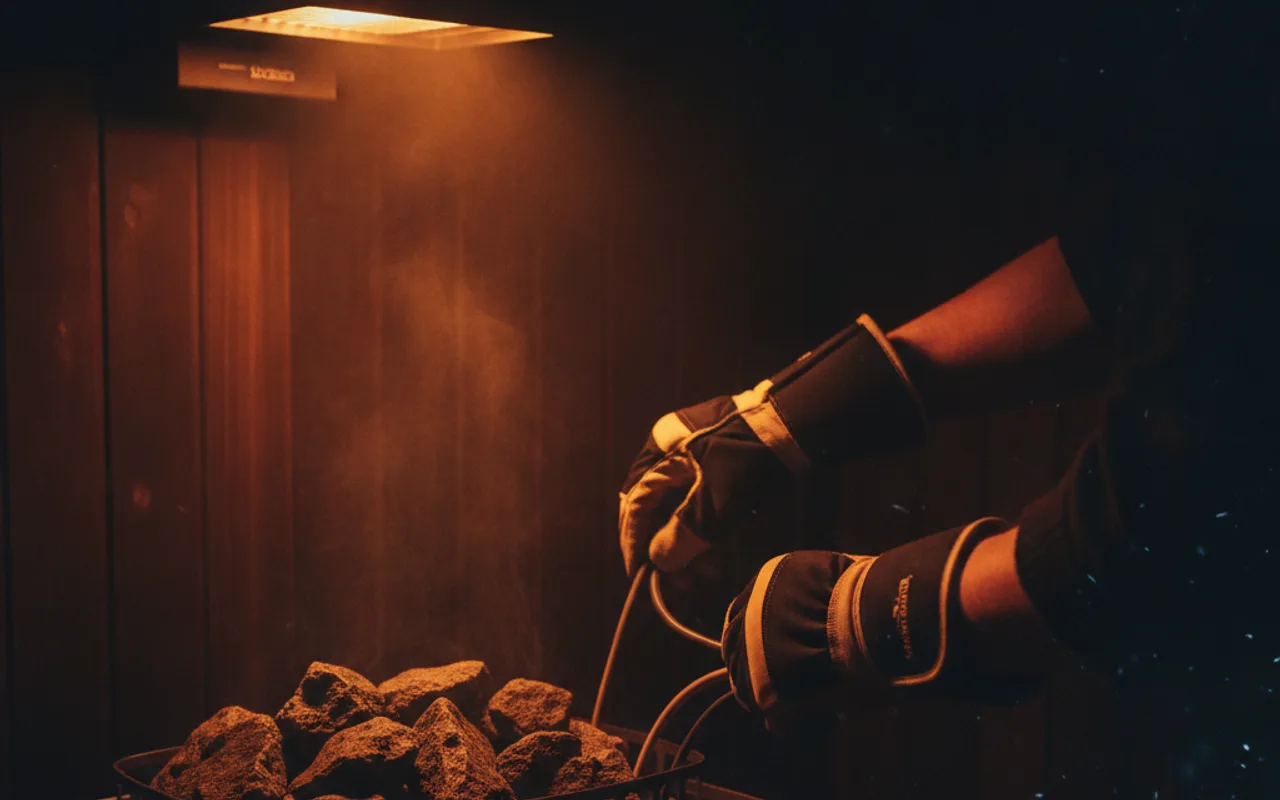
Sauna heaters are rated in kilowatts, and the breaker that protects the circuit comes from that rating, rounded up to the next standard breaker size from the heater's actual full-load amperage — not from the size of the room or a number a retailer rounds to. The heater's nameplate is the final word, but these are the sizes we see most often on Calgary installs:
- 4.5–6 kW heater (a typical 2–4 person cabin) — usually a 30A, 240V circuit on 10 AWG copper.
- 8 kW heater (a larger family-size cabin) — usually a 40A, 240V circuit on 8 AWG copper.
- 9 kW and up — commonly 40A to 50A depending on the exact draw; this is where the nameplate, not a chart, decides the final number.
- Small plug-in infrared panels under roughly 1.8 kW can sometimes run on a standard 120V, 15A or 20A outlet — but confirm that against the manufacturer's instructions before you buy, not after.
Does a sauna need GFCI protection?
Short answer: usually not on the heater circuit itself. GFCI protection exists for wet-location risk — current leaking toward water or a grounded surface in a damp environment. A dry sauna heater doesn't carry that risk the way a hot tub pump or an outdoor outlet does, so the Canadian Electrical Code does not generally require GFCI protection on that specific circuit. What can still need it is anything else in the room — a standard outlet or an accent light, depending on exactly where it sits relative to the heat source — which is why this is worth confirming with whoever is wiring the room rather than assuming either way. Most listed sauna heaters also ship with a built-in or wall-mounted timer that limits how long the unit can run unattended — a required safety feature, not an optional extra, and one more reason this isn't a job to improvise with a spare breaker.
Permits and the City of Calgary inspection
A dedicated sauna circuit is new electrical work, and like any new circuit it requires a City of Calgary electrical permit — a licensed contractor pulls it as part of the job. The inspection that follows confirms the breaker size, wire gauge, and hardwired connection to the heater all match the nameplate and the code, which matters more than it looks on a job this size: an unpermitted high-current circuit behind a finished sauna wall is exactly the kind of thing that complicates an insurance claim later, as we explain in our guide to electrical permits in Calgary. The same permit logic applies outside city limits too — Airdrie, Cochrane and the other communities we serve each have their own permit authority, but none of them treat a new 240V circuit as something to skip.
Does your panel have room?
Before a heater is bolted to the wall, a load calculation answers the question that actually determines your budget: does your existing service have headroom for another 30 to 50 amps of continuous draw? On a 200-amp service with typical residential loads, there is usually room to spare. On an older 100-amp Calgary home that is already carrying a hot tub, an EV charger, or a secondary suite, the math is tighter, and the project can turn into a panel conversation fast — our guide to a panel that's full with no breaker space covers the sub-panel and upgrade options that come up most often in exactly this situation. If you're already comparing the cost of a sauna circuit against other 240V work, our 240V outlet installation cost guide is a useful reference point for how distance and existing capacity move the number.
What it costs in Calgary
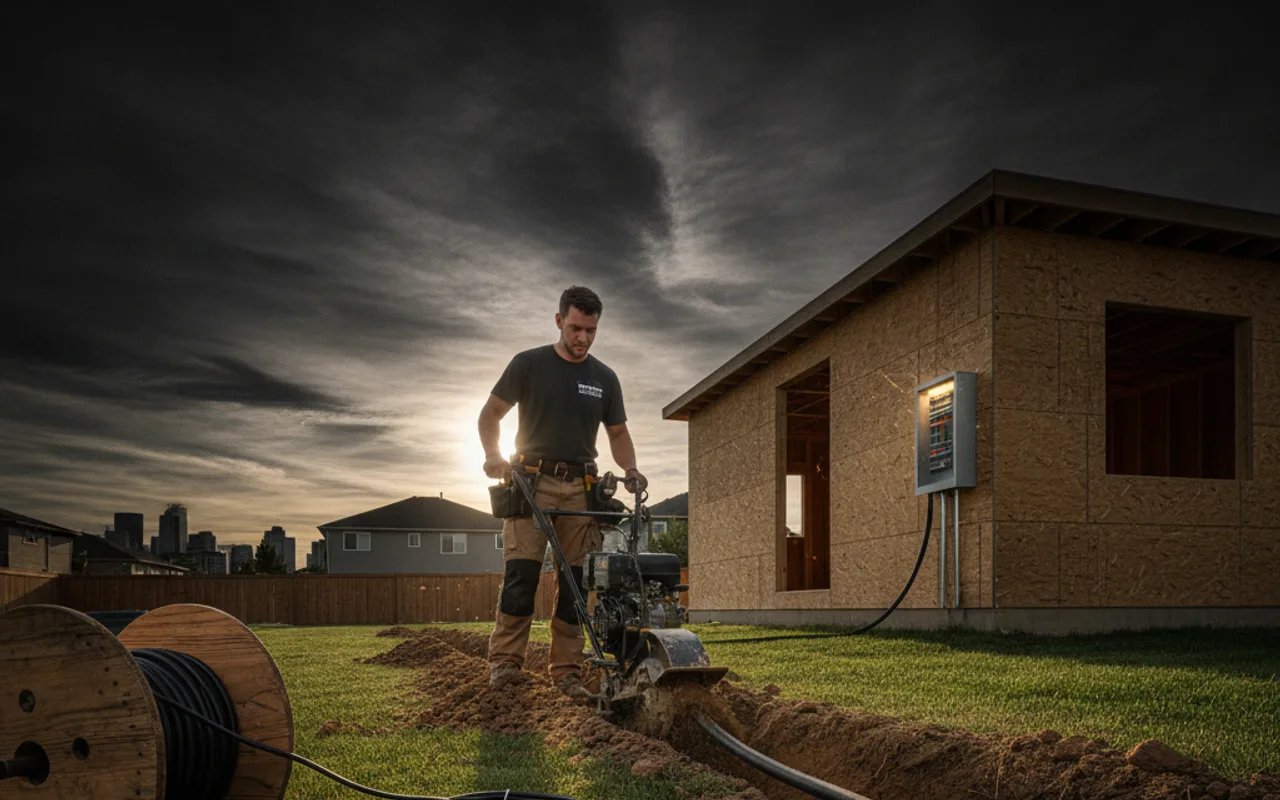
On an existing panel with room to spare, running a dedicated sauna circuit is one of the more affordable high-power additions we quote — typically $600 to $1,800 all-in for the breaker, the wiring run, the hardwired connection to the heater, and the permit, depending mostly on how far the sauna sits from your panel. An outdoor or detached sauna on an acreage near Rocky View County or the Foothills, where the run means buried conduit to a shop or house panel sized for Alberta frost depth, lands toward the higher end or beyond it. If the load calculation shows your panel is already tight, a sub-panel or a full service upgrade changes that number meaningfully, and our panel upgrade cost guide breaks down what that step typically adds on its own. These are Calgary market ranges, not a quote — the only way to get a firm number is a look at your actual panel and the heater you've chosen.
Infrared vs. traditional: does the wiring change?
It depends entirely on wattage, not on which style of sauna you picked. A full-size infrared cabin with a few kilowatts of panel heaters draws roughly the same as a traditional rock-heater sauna of similar size, and gets the same dedicated 240V treatment. The exception is the smallest single-panel infrared units, which sometimes draw little enough to run on a standard 120V circuit on a cord-and-plug connection — but that's a decision made from the heater's nameplate and the manufacturer's installation manual, not from the marketing copy on the box.
From a basement sauna build in a Calgary bungalow to a cedar cabin on an acreage near Cochrane or Okotoks, the team at Shock Stop sizes the circuit to your actual heater, runs the load calculation on your actual panel, and handles the permit and inspection so the room is ready the day the heater ships. See our renovation electrical page for the rest of what that kind of project involves, and reach out for a quote on your sauna wiring across Calgary, Airdrie, Cochrane and the surrounding communities.
Questions about this
Does a sauna heater need GFCI protection?
Usually not on the heater circuit itself. A dry sauna heater is a heating appliance, not wet-location equipment like a hot tub or pool pump, so the Canadian Electrical Code does not generally require GFCI protection on that circuit. Any standard outlet or light fixture elsewhere in the sauna room may still need it depending on where it sits — your electrician will confirm based on the exact layout.
Can the sauna light share the heater circuit?
No. Sauna heaters are required to run on their own dedicated circuit, with nothing else — not a light, not a stereo, not a vent fan — sharing that breaker. The light and any accessories get their own circuit, sized separately.
How much does it cost to wire a sauna in Calgary?
On a panel with room to spare, a dedicated 240V sauna circuit typically runs $600 to $1,800 all-in — breaker, wiring, hardwired connection to the heater, and the City of Calgary permit — depending mostly on the distance from your panel. If a load calculation shows your panel is already tight, a sub-panel or service upgrade adds to that, and our panel upgrade cost guide breaks down what that step typically costs on its own.
Do I need a permit to install a sauna heater in Calgary?
Yes. A new dedicated circuit is new electrical work, which requires a City of Calgary electrical permit regardless of how small the job looks. A licensed contractor pulls the permit as part of the install, which triggers the inspection that confirms the breaker, wiring and hardwired connection were all done to code.
Can I just plug a sauna heater into a regular outlet?
Only for the smallest infrared panels rated under about 1.8kW, and only if the manufacturer's instructions explicitly allow a cord-and-plug connection on a standard 120V circuit. Any full cabin heater or higher-wattage infrared setup needs to be hardwired to its own dedicated circuit — treat the nameplate rating as the deciding factor, not a guess.
Does an outdoor or acreage sauna need different wiring than an indoor one?
The heater sizing and circuit rules are the same, but an outdoor or detached sauna — common on acreage properties around Rocky View County and the Foothills — usually means a buried conduit run from the house or shop panel, sized and depth-rated for Alberta frost conditions, which adds to both the cost and the timeline.