One outlet gone dead, or a whole circuit that just stopped — here is how to tell what happened, what you can safely check yourself, and when it is time to call a licensed electrician.
A dead outlet is one of the most common electrical calls we get — and one of the easiest to misdiagnose. Sometimes it is a single receptacle that stopped working; sometimes it is every outlet on one side of a room. The cause could be anywhere from a tripped GFCI two rooms away to a breaker that let go quietly without anyone noticing. Before you assume the worst, it helps to know what actually causes a circuit to go dead and which checks are safe to do yourself.
“Quick answer: check the breaker panel first — a tripped breaker is the most common cause. If the breaker is fine, look for a GFCI outlet upstream with a tripped reset button; one GFCI can knock out several outlets downstream. If neither fixes it, stop testing and call a licensed electrician — a dead circuit with a healthy breaker can mean a loose or failed connection inside the wall.”
Start at the panel — is the breaker actually tripped?
Open the panel and look for a breaker that is not lined up with the rest — sitting in the middle position rather than fully ON. A breaker can trip just enough to cut power without fully flipping to OFF, which is easy to miss on a quick glance. If you find one, flip it firmly to OFF, then back to ON. If it holds, the circuit should come back; if it trips again immediately, stop resetting it and treat it as a fault, not a fluke — our guide to why breakers keep tripping in Calgary homes covers what a repeated trip actually means.
Check for a tripped GFCI outlet — even in another room
If the breaker is fine but the outlet is still dead, the next place to look is a GFCI outlet, not necessarily in the same room. GFCI protection is often wired so one outlet — usually in a bathroom, kitchen, garage, or outdoors — protects several "downstream" outlets on the same circuit. A dead outlet in a bedroom, hallway, or basement can trace back to a tripped GFCI outlet somewhere else in the house entirely. Walk the bathrooms, kitchen, garage, and any exterior outlets and press RESET on each GFCI you find; our guide to GFCI and AFCI outlets in Calgary explains how that downstream wiring works and where code requires it.
- Bathrooms, kitchens, garages, and outdoor outlets are the most likely spots to find the GFCI controlling a dead circuit elsewhere in the house.
- A GFCI with no lit indicator, or one where RESET does not click firmly, may be worn out rather than simply tripped.
- If a GFCI trips again right after you reset it, that is a real fault downstream — not a nuisance trip.
Breaker fine, no GFCI involved — now what?
This is where a dead outlet stops being a five-minute check. If the breaker never tripped and there is no GFCI in the picture, the circuit is live at the panel but not delivering power somewhere along its run — which points to a loose or failed connection inside a wall, a box, or the outlet itself. A few things can cause this:
- A loose wire connection at the outlet or at a junction box feeding it — vibration, age, or a poor original connection can work a wire loose over years.
- A "backstabbed" outlet connection — wires pushed into spring-clip holes on the back of cheaper outlets rather than screwed to the side terminals — which is a known weak point that can fail without warning.
- A failed outlet itself, from age or a past overload, even though the wiring behind it is sound.
- A break somewhere earlier in the run, which can also leave every outlet after that point dead while outlets before it still work.
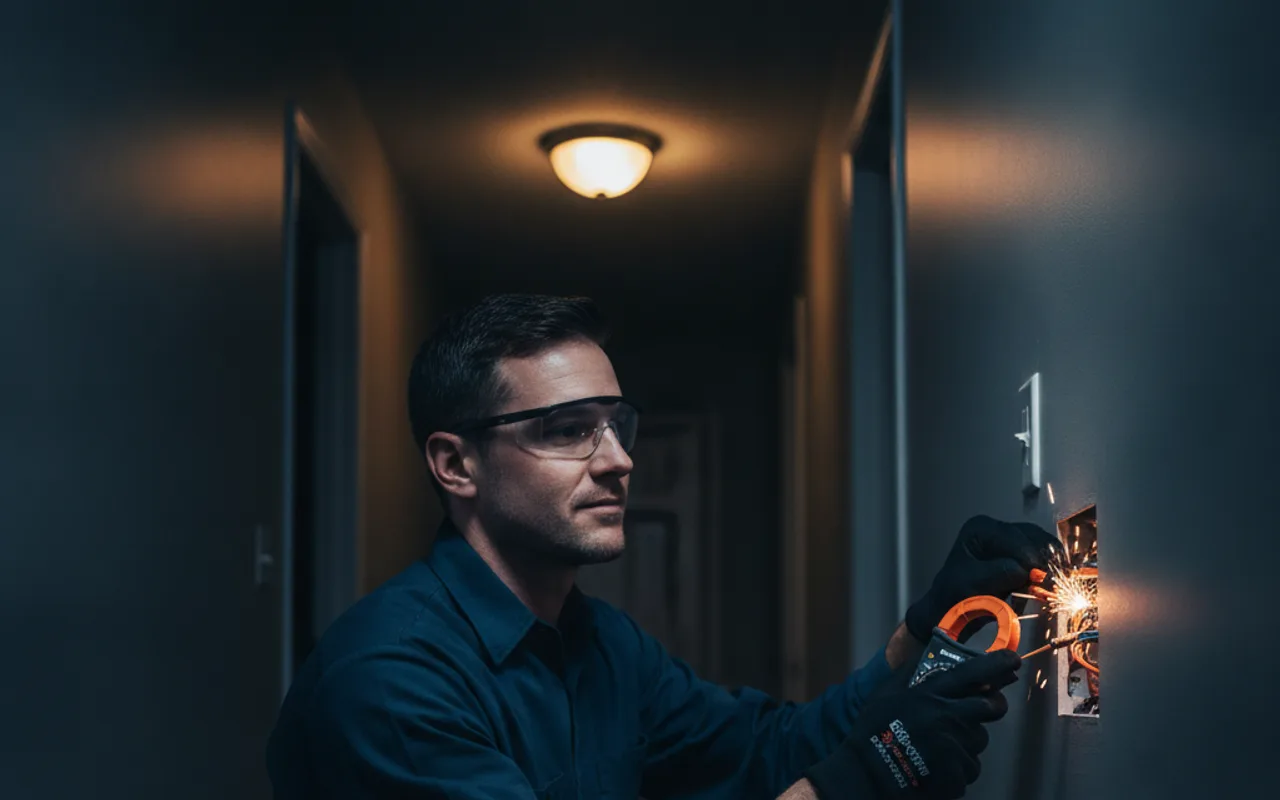
None of these are things to chase with a screwdriver on your own. Opening a wall outlet to probe live wiring without confirming the circuit is off at the breaker — and without knowing what you are looking at — is exactly how a simple dead outlet turns into a shock or a fire risk. This is licensed-electrician territory: tracing which segment of the circuit lost power and fixing the actual connection, not just the symptom.
Older Calgary homes: why this happens more often
The age and wiring type of a home changes how likely a "mystery dead circuit" is. Homes with aluminum branch wiring — common in Calgary roughly 1965 to 1975 — are particularly prone to connections loosening at outlets and switches as the metal expands and contracts over decades, which can show up as an outlet that just quietly stops working with no tripped breaker in sight. Our guide to aluminum wiring in Calgary covers what that looks like and why it needs specific connectors, not a standard outlet swap. Homes with knob-and-tube wiring, mostly in Calgary's pre-1950s inner-city communities, carry decades-old brittle connections that can fail the same way. If your home falls into either era and a circuit has gone dead with a healthy breaker, that history is worth mentioning to whoever comes to look at it.
A quick self-check before you call
- Check the breaker panel for a tripped or off-position breaker.
- Reset any GFCI outlets in bathrooms, the kitchen, the garage, and outdoors — even ones in a different room than the dead outlet.
- Test whether nearby outlets on the same wall are also dead, which tells an electrician roughly where along the circuit the problem sits.
- Note whether the outlet ever felt warm, smelled odd, or made noise before it died — that detail matters for diagnosis.
- If none of that brings it back, stop testing and book a diagnostic visit rather than opening the outlet yourself.
When it is a two-minute fix, and when it is not
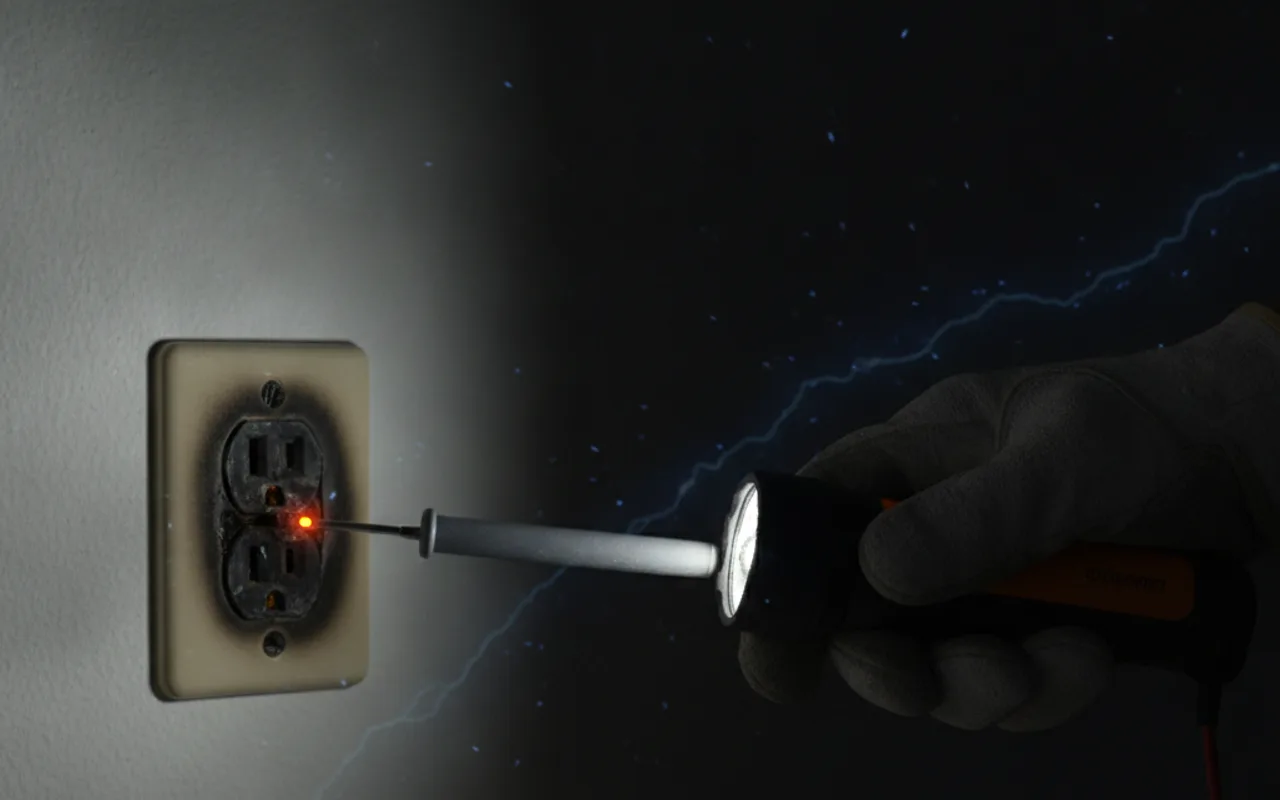
A tripped breaker or a tripped GFCI is genuinely a two-minute fix, and most Calgary homeowners can handle both checks safely without any tools. Everything past that — a healthy breaker with a dead outlet, a circuit that has gone dead more than once, any warmth, smell, or scorch mark, or a home with aluminum or knob-and-tube wiring — is worth a proper diagnosis rather than a guess. Tracing a dead circuit to its actual cause is quick work for a licensed electrician with the right tester, and it is the difference between a fix that lasts and a wall you keep resetting and hoping about. If the outlet died with a burning smell, sparks or scorching, skip the checklist and follow our emergency electrician steps instead.
The team at Shock Stop diagnoses dead outlets and circuits that stopped working across Calgary and the surrounding communities, and we fix the actual connection, not just the outlet in front of you. If a circuit in your home has gone dead and the breaker and GFCI checks did not bring it back, reach out and we will trace it down — see our service and repair page for the full range of troubleshooting we handle.